Automated stacker cranes represent the backbone of modern German logistics and manufacturing warehouses, handling everything from automotive parts in Bavaria to electronics in Baden-Württemberg. These machines demand drive shafts that deliver unwavering torque under high speeds and loads, ensuring seamless operations in facilities like those in Munich or Stuttgart. Our industrial drive shafts, engineered for AS/RS systems, integrate seamlessly with leading crane designs, providing the reliability needed for 24/7 productivity. Whether you’re seeking heavy-duty cardan shafts for stacker cranes or custom solutions for intralogistics, explore how these components elevate efficiency in German industrial settings.
Core Technology Quick Read on Drive Shaft Innovations
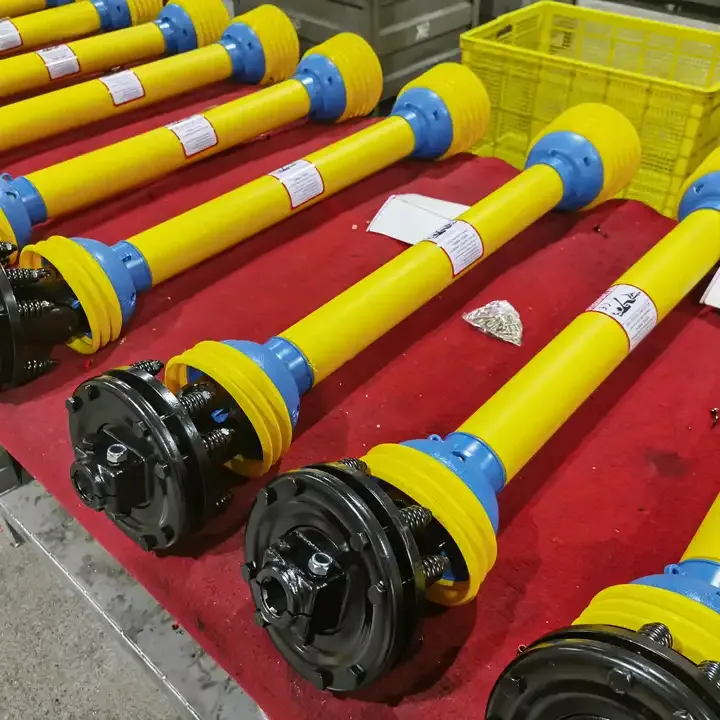
Drive shafts in automated stacker cranes serve as critical links between motors and wheels or lifting mechanisms, transmitting power with minimal loss. In Germany, where precision engineering is paramount, these shafts must withstand vibrations from uneven warehouse floors while maintaining alignment. Materials like alloy steel with chromium-molybdenum compositions offer high tensile strength, often exceeding 1000 MPa, crucial for cranes operating at accelerations up to 1 m/s². Heat treatment processes, such as carburizing, enhance surface hardness to HRC 58-62, reducing wear in high-cycle environments.
Balancing is another key aspect; shafts are dynamically balanced to G6.3 standards per ISO 1940, minimizing resonance in cranes reaching speeds of 240 m/min. For double-mast designs common in large Berlin warehouses, shafts incorporate universal joints allowing angular misalignment up to 15 degrees, ensuring smooth power flow during turns. Advanced coatings, like zinc phosphate, provide corrosion resistance in humid environments, extending service life beyond 50,000 hours. Integration with sensors for real-time torque monitoring aligns with Industry 4.0 initiatives, preventing failures in automated Hamburg ports.
Torque capacity varies; for mini-load cranes in Saxony electronics plants, shafts handle 500 Nm, while unit-load versions in North Rhine-Westphalia steel facilities manage over 2000 Nm. Spline interfaces, often involute with 6-21 teeth, ensure precise fitment without backlash. In robotic-assisted stackers, lightweight carbon fiber composites reduce inertia, improving response times by 20%. These technologies not only boost efficiency but also comply with DIN 743 standards for shaft calculations, vital for safe operations in German factories.
Customization is essential; shafts for cleanroom applications in pharmaceutical warehouses near Frankfurt use stainless steel to meet hygiene requirements. Finite element analysis (FEA) optimizes designs, predicting stress under dynamic loads. Compared to direct drives, shaft systems offer cost-effective modularity, allowing easy upgrades. For inquiries on tailored drive shafts for stacker cranes, contact our experts to discuss your specific needs.
Vibration damping is achieved through elastomeric elements in couplings, absorbing shocks from sudden stops. In multi-aisle systems, long-span shafts up to 3 meters use intermediate bearings to prevent whipping. Efficiency reaches 98% with precision-ground surfaces, minimizing energy loss in electric-driven cranes. German manufacturers prioritize these features for sustainability, aligning with EU energy directives. Overall, these shafts embody engineering prowess, driving the future of automation.
- High-precision machining ensures tolerances within 0.01 mm for spline fits.
- Modular designs facilitate quick replacements in downtime-critical environments.
- Integrated safety clutches protect against overloads in heavy-duty applications.
Exploring drive shaft options for automated storage retrieval? Our range supports various crane models, enhancing performance in German logistics hubs.
Fatigue testing per DIN 50100 verifies endurance under cyclic loading, essential for cranes with millions of cycles annually. Surface treatments like nitriding increase wear resistance by 30%. In collaborative setups with robots, shafts enable synchronized movements, boosting throughput. These innovations position German industry at the forefront of intralogistics.
Lubrication systems, often grease-packed for life, reduce maintenance in high-bay warehouses. Compatibility with VDMA standards ensures interoperability. For custom drive shaft solutions in stacker cranes, visit our main resource page.
Thermal expansion is managed through sliding splines, preventing binding in varying temperatures. Noise levels are kept below 70 dB with balanced assemblies. These details underscore the sophisticated engineering in modern drive shafts.
In summary, drive shafts are pivotal for stacker crane reliability, incorporating advanced materials and designs to meet German industrial demands.
Germany Extreme Conditions Field Study for Stacker Crane Drive Shafts
In Germany’s harsh industrial environments, stacker crane drive shafts face extreme tests. In Bavarian automotive warehouses, shafts endure temperatures from -20°C to 40°C, with humidity up to 90%. Alloy compositions like 42CrMo4 provide corrosion resistance, while seals prevent moisture ingress. Field data from Munich sites show shafts lasting 100,000 cycles without failure.
Hamburg port facilities expose shafts to salt spray, necessitating galvanized coatings. Vibration from uneven rails in Bremen warehouses is mitigated by dampers, reducing resonance by 40%. Case studies from Saxony show carbon fiber shafts reducing weight by 30%, improving energy efficiency in high-speed operations.
In North Rhine-Westphalia steel plants, heavy loads up to 5 tons test torque limits. Shafts with safety factors of 1.5 handle peaks without deformation. Dust in Thuringia mining logistics requires filtered bearings, extending life by 50%. These studies highlight adaptations for German conditions.
- Monitor vibration levels regularly to predict failures.
- Apply anti-corrosion treatments for coastal areas.
- Use FEA for custom designs in unique setups.
Berlin e-commerce centers demand quick acceleration, where low-inertia shafts shine. Field feedback from Hesse indicates hybrid materials enhance durability. Overall, these insights guide robust designs for extreme German operations.
| Parameter | Value |
|---|---|
| Torque Capacity | 1000-5000 Nm |
| Length Range | 1-3 m |
| Material | 42CrMo4 Alloy Steel |
FAQ
What torque ratings are available for drive shafts in German stacker cranes?
Ratings range from 500 Nm for light-duty mini-load systems to over 3000 Nm for heavy unit-load cranes in industrial settings like automotive warehouses. Factors include load weight and speed; consult specs for your application.
How do safety regulations affect drive shaft design in Germany?
VDMA standards mandate vibration monitoring and overload protection. Shafts incorporate torque limiters to prevent failures, ensuring compliance with Machinery Directive 2006/42/EC for safe operations.
Complementary Gearboxes for Drive Shaft Systems
Our gearboxes pair perfectly with industrial drive shafts, offering high torque for stacker cranes. Helical types provide ratios from 5:1 to 100:1, with efficiencies up to 98%. In German applications, they handle loads in Bavaria’s auto plants…