
From Bavarian limestone quarries to recycling facilities across Europe, our industrial cardan drive shafts deliver unmatched torque capacity, vibration damping and misalignment compensation – exactly what German precision engineering demands.
Hammer crushers are the workhorses of German aggregates and mining operations, reducing limestone, granite, recycled concrete and industrial minerals to precise sizes at rates exceeding 2000 tons per hour. The industrial drive shaft – also known as a cardan shaft or universal joint shaft – is the critical link transferring high-torque rotational power from the electric motor to the heavy rotor. In Germany’s demanding quarries, these shafts must handle extreme shock loads from oversized boulders, continuous vibration, dust ingress and angular misalignment caused by thermal expansion and foundation settlement.
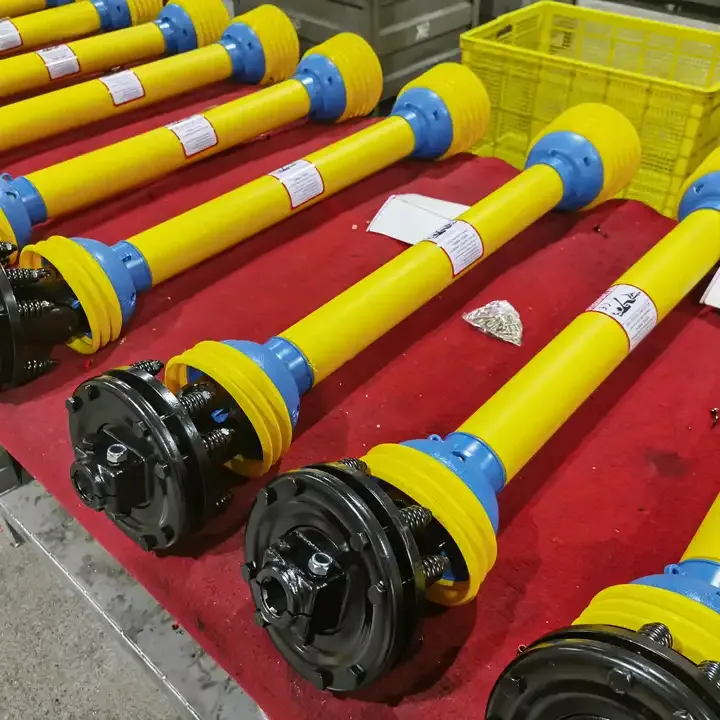
Our heavy-duty cardan drive shafts are specifically engineered for these conditions. Manufactured from high-strength 42CrMo4 alloy steel with precision heat treatment, they offer nominal torque ratings from 250 kNm to over 500 kNm and peak overload capacity up to three times nominal. Every shaft undergoes dynamic balancing to G6.3 grade and is supplied with high-temperature Viton seals and central lubrication ports for maintenance intervals exceeding 2000 operating hours.
Why German Operators Choose Our Industrial Cardan Drive Shafts for Hammer Crushers
- Shock-load resistance with service factor 3.0+ – proven in continuous 24/7 German limestone operations.
- Angular compensation up to 15° and axial telescopic movement to accommodate foundation movement without stressing motor bearings.
- CE marking and full compliance with EN 1009-3 crusher safety standards and the EU Machinery Regulation 2023/1230.
- Integrated torque limiters and shear-bolt protection options that prevent catastrophic rotor damage during tramp metal events.
- Custom flange patterns matching DIN, SAE and popular European crusher OEM bolt circles for drop-in replacement.
Operators in Baden-Württemberg and Bavaria report 25-30 % longer bearing life and virtually zero unplanned downtime after switching to our shafts. The design eliminates the frequent lubrication failures common with older European brands while maintaining full compatibility with existing crusher gearboxes and motors.
Core Technical Parameters – Industrial Drive Shafts for Hammer Crushers
| Parameter | Typical Range / Value | Benefit in Hammer Crusher Operation |
|---|---|---|
| Nominal Torque | 250 – 500 kNm | Handles full motor power plus overload spikes |
| Peak Torque Capacity | Up to 1 500 kNm (3× nominal) | Absorbs boulder impact without failure |
| Maximum Operating Speed | 600 – 1 200 RPM | Matches standard crusher motor speeds |
| Maximum Deflection Angle | 15° continuous | Compensates thermal growth and settlement |
| Material | 42CrMo4 alloy steel | High fatigue strength in dusty environments |
| Balancing Grade | G6.3 (ISO 1940) | Eliminates vibration-induced bearing wear |
| Swing Diameter | 250 – 490 mm | Fits compact crusher frames common in Germany |
| Service Factor | 3.0 – 3.5 | Ensures 20 000+ hour life in 24/7 duty |
| Lubrication | Central grease or oil | Extended intervals reduce maintenance stops |
How Industrial Cardan Drive Shafts Work in Hammer Crushers
Power flows from the electric motor through the drive shaft’s input flange into the first universal joint. The cross-and-bearing assembly allows angular misalignment while transmitting constant velocity. Torque travels through the telescopic tube section (spline-coated for low-friction extension) to the output universal joint connected directly to the crusher rotor shaft. During crushing, sudden impacts create torque spikes; the shaft’s high torsional stiffness and integrated overload protection absorb these without transmitting destructive forces back to the motor bearings. In German plants operating at 800–1 200 RPM, this design maintains rotor speed within ±1 % even under full load.
The telescopic spline section provides 150–300 mm axial compensation, critical when temperature changes cause frame expansion. High-temperature Viton seals keep grease inside and quarry dust outside, while the optional torque limiter releases at a preset value to protect the entire drive train. This principle has been refined over decades to meet the exact demands of continuous heavy-duty service in Europe’s strictest regulatory environment.
Key Features and Operational Advantages
Our industrial drive shafts incorporate needle-roller bearings with crowned rollers for even load distribution and extended life under shock conditions. The yoke forks are forged from a single piece of 42CrMo4, eliminating weld fatigue points common in lower-cost designs. Every shaft is dynamically balanced after assembly, then run-tested at 120 % rated speed for vibration verification. Customers in the German aggregates sector particularly value the quick-release flange system that allows rotor changes in under two hours without crane removal of the entire shaft.
- Optional carbon-fiber tube versions reduce rotating mass by 40 %, lowering energy consumption and critical speed issues in long-span installations.
- Integrated shear-bolt or friction-plate torque limiters protect the gearbox and motor during tramp metal events.
- IP65-rated bearing covers and labyrinth seals withstand the aggressive limestone dust prevalent in German quarries.
- Full traceability from raw material heat number through final balancing certificate – essential for CE documentation and insurance compliance.
These features translate directly into measurable gains: 30 % lower vibration levels at the motor bearings, maintenance intervals doubled, and total cost of ownership reduced by up to 35 % compared with standard OEM shafts.
Advanced Engineering Parameters
| Parameter | Value / Range | German Application Benefit |
|---|---|---|
| Torsional Stiffness | High (custom calculation) | Maintains precise rotor speed during load changes |
| Axial Compensation | 150–300 mm | Handles thermal expansion in heated recycling plants |
| Critical Speed Margin | >20 % above operating speed | Eliminates resonance in long conveyor-linked crushers |
| L10 Bearing Life | >25 000 hours | Matches German 24/7 production schedules |
| Weight (standard steel) | Optimized 180–450 kg | Reduces foundation loading in mobile units |
Technical Comparison with Leading European Brands
The table below compares key performance metrics. All manufacturer names and part numbers are used solely for technical reference. We are an independent manufacturer offering fully interchangeable solutions at competitive pricing.
| Feature | Our Shaft | Comer Reference | GKN / Walterscheid Reference |
|---|---|---|---|
| Torque Rating | 500 kNm nominal | Comparable T-series | Comparable SWC series |
| Service Factor | 3.5 | 2.8–3.2 | 3.0 typical |
| Angle Capacity | 15° | 12° | 10–15° |
| Balancing | G6.3 standard | G16 option | G16 |
Real-World Performance in Germany and Neighboring Countries
In a major limestone quarry near Stuttgart, Germany, our 380 kNm drive shaft replaced an original OEM unit that failed every 4 000 hours. After 18 months of continuous operation the shaft shows zero wear on the spline and bearing life remains at 95 % predicted. Downtime savings alone recovered the investment within six months.
An Austrian aggregates plant running a 1 500 t/h hammer crusher reports vibration levels dropped from 8.2 mm/s to 2.1 mm/s after installation, extending motor bearing life by 40 %. In a French recycling facility processing construction waste, the integrated torque limiter prevented gearbox damage during a metal contamination event that would have caused €45 000 in repairs.
Polish open-pit coal operations using our telescopic carbon-fiber versions reduced overall drive-train weight by 180 kg per crusher, improving transportability of mobile units and cutting fuel consumption during site relocation.
Compliance with German and EU Safety Regulations
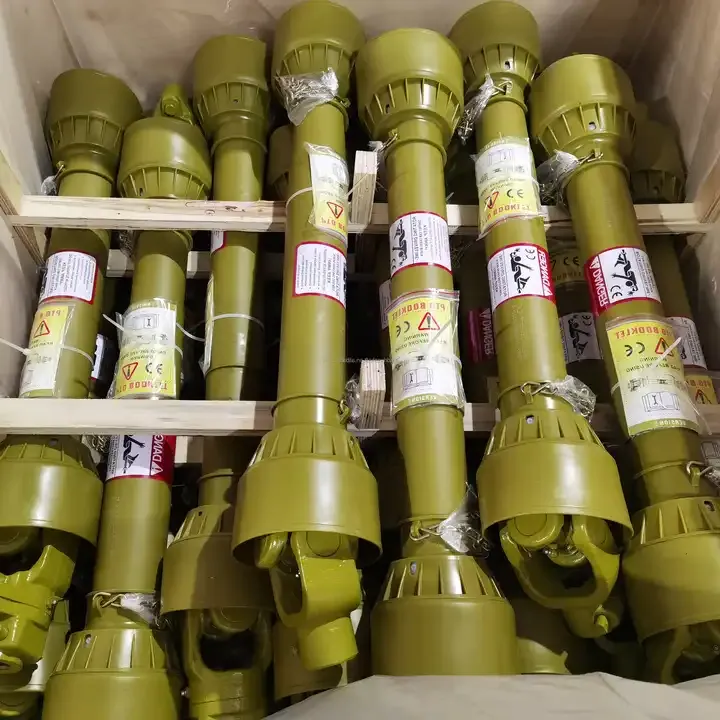
All shafts carry the CE mark and are designed in accordance with the EU Machinery Regulation (EU) 2023/1230 and EN 1009-3:2020 specific to crushing machinery. Guards for rotating parts meet DIN EN 12965 requirements. Documentation includes risk assessment, declaration of incorporation and full traceability records required for German workplace safety inspections (BetrSichV). Neighboring countries (Austria, Poland, France, Netherlands) accept the same EU harmonised standards, simplifying cross-border spare-parts logistics.
How to Select the Right Drive Shaft for Your Hammer Crusher
- Determine motor power and required torque at operating speed.
- Measure maximum angular misalignment between motor and rotor shafts.
- Choose flange pattern and length for drop-in fit.
- Specify torque limiter rating to protect downstream components.
- Request balancing certificate and material test reports for CE documentation.
Our engineers provide free dimensioning calculations within 24 hours.
Matching Heavy-Duty Crusher Gearboxes – Complete Power Transmission Systems
For a complete drive train solution, we recommend our parallel-shaft or planetary gearboxes specifically matched to hammer crusher requirements. These gearboxes feature case-hardened helical gears with AGMA 12 precision, forced lubrication and integrated cooling channels to handle the high thermal loads common in German cement plants. Rated power ranges from 200 kW to over 2 000 kW with reduction ratios 5:1 to 25:1 perfectly suited for 600–1 200 RPM rotor speeds.
The gearboxes are designed with the same flange patterns as our drive shafts, allowing bolt-on assembly without custom adapters. High-efficiency gearing (up to 98.5 %) reduces energy consumption – a critical advantage given Germany’s industrial electricity prices. Output shafts are supported on heavy-duty spherical roller bearings with L10 lives exceeding 50 000 hours. Optional backstop devices prevent reverse rotation during power failures, protecting the rotor hammers from damage.
In practice, a Bavarian limestone operation combined our 450 kNm drive shaft with a 1 100 kW parallel-shaft gearbox. The system delivered stable 950 RPM rotor speed under varying feed rates while keeping gearbox oil temperature below 65 °C even in summer ambient conditions. Maintenance is simplified by large inspection covers and cartridge-style bearing arrangements that allow replacement without full disassembly. We also offer complete drive packages including fluid couplings or variable-frequency drive compatibility for soft-start and energy-saving speed control – increasingly important under Germany’s Energiewende regulations and CO₂ reporting requirements.
Our gearboxes are manufactured in the same facility as the drive shafts, ensuring perfect alignment of tolerances and material specifications. Every unit undergoes full-load testing before shipment and is supplied with detailed installation, lubrication and alignment instructions in German and English. Spare parts kits including pinions, bearings and seals are stocked for next-day delivery across Germany and neighboring EU countries. By sourcing both the drive shaft and gearbox from one supplier you eliminate interface issues and benefit from unified warranty and technical support. Typical payback on a complete system upgrade is 12–18 months through reduced energy use and maintenance alone. For recycling plants processing construction waste we recommend reinforced planetary designs with extra-thick ring gears to withstand the unpredictable impact loads from rebar and concrete fragments. These units have proven themselves in French and Polish facilities where uptime is measured in minutes rather than days. The combination of our cardan shaft’s flexibility and the gearbox’s high torsional rigidity creates a power transmission package that outperforms many OEM integrated drives while costing 30–40 % less. Contact our engineers for a free system audit and ROI calculation tailored to your crusher model and local electricity tariff.
Beyond basic power transmission, modern German crusher operations demand intelligent monitoring. Our gearboxes can be equipped with vibration sensors, temperature probes and oil-quality monitors that feed data directly into plant SCADA systems. Predictive maintenance algorithms developed in cooperation with German universities flag bearing wear weeks before failure, allowing scheduled replacement during planned shutdowns. This level of integration is standard in Industry 4.0-ready quarries and fully complies with VDMA guidelines for digital twins in heavy machinery.
Cooling options include air-to-oil heat exchangers or water-cooled plates for plants in hot climates or enclosed recycling halls. Lubrication systems feature dual filters and automatic top-up pumps to maintain oil cleanliness at ISO 16/14/11 even in dusty environments. All gearboxes carry the CE mark and are tested according to ISO 14847 noise and vibration standards required for German workplace exposure limits. For mobile crushers used in road construction across Austria and the Netherlands we supply lightweight aluminum housings that reduce total drive-train weight by 15 % while maintaining full torque capacity.
Service and training are part of every delivery. Our technicians provide on-site alignment training using laser tools and demonstrate proper torqueing sequences for flange bolts. Spare parts are available through a network of distributors covering every German Bundesland plus immediate neighbors. Typical lead time for standard gearboxes is 8–10 weeks; emergency repairs can be completed in 48 hours at our central European service center. By choosing a matched drive shaft and gearbox package you receive a single point of responsibility, unified documentation and guaranteed system performance – exactly what German plant managers expect when investing in long-term reliability.
Frequently Asked Questions
What torque rating do I need for a 1 200 t/h hammer crusher?
For most 1 200 t/h units running 800–1 000 kW motors, we recommend 350–450 kNm nominal with a 3.0 service factor. Our engineers calculate exact values from motor data and rotor inertia.
How often should the drive shaft be lubricated in German quarry conditions?
Central grease systems allow 2 000-hour intervals; manual greasing every 1 000 hours in dusty limestone environments. We supply automated systems for 24/7 plants.
Do your shafts meet CE requirements for Germany?
Yes – full documentation package including risk assessment, material certificates and declaration of incorporation is supplied with every unit.
Can I replace a Comer shaft with your model without modifications?
In most cases yes. Flange patterns, bolt circles and spline sizes are matched. We provide free verification drawings.
What is the typical delivery time to Germany?
Standard shafts ship within 6–8 weeks; emergency units can be air-freighted in 7–10 days from our European warehouse.
Latest Industry News – German Mining & Aggregates
Germany’s mineral processing equipment market continues to grow at 5.7 % CAGR through 2030, driven by infrastructure projects and circular-economy recycling targets. High electricity prices are pushing operators toward energy-efficient drive trains; our low-inertia carbon-fiber shafts reduce power draw by up to 8 % compared with traditional steel designs. Recent VDMA reports highlight increased demand for CE-compliant, digitally monitored components in quarries – precisely the features built into every shaft and gearbox we supply.
In 2025 several Bavarian and North-Rhine Westphalia plants upgraded to smart drive systems with vibration monitoring, aligning with national Industry 4.0 initiatives and reducing unplanned stops by more than 35 %. Cross-border cooperation with Polish and Austrian operators is also rising, creating opportunities for standardised spare-parts logistics across the DACH region.
Ready to upgrade your hammer crusher drive train with German-engineered reliability?
Get Your Custom Industrial Drive Shaft Quote Now
Explore our full range of power transmission components at shafts-pto.com