
Robust power transmission solutions designed for continuous 24/7 operation in rotary kilns. Delivering extreme torque capacity, precise misalignment compensation, and long service life under high-temperature, dusty conditions typical of German cement plants.
Why German Cement Producers Choose These Drive Shafts for Rotary Kilns
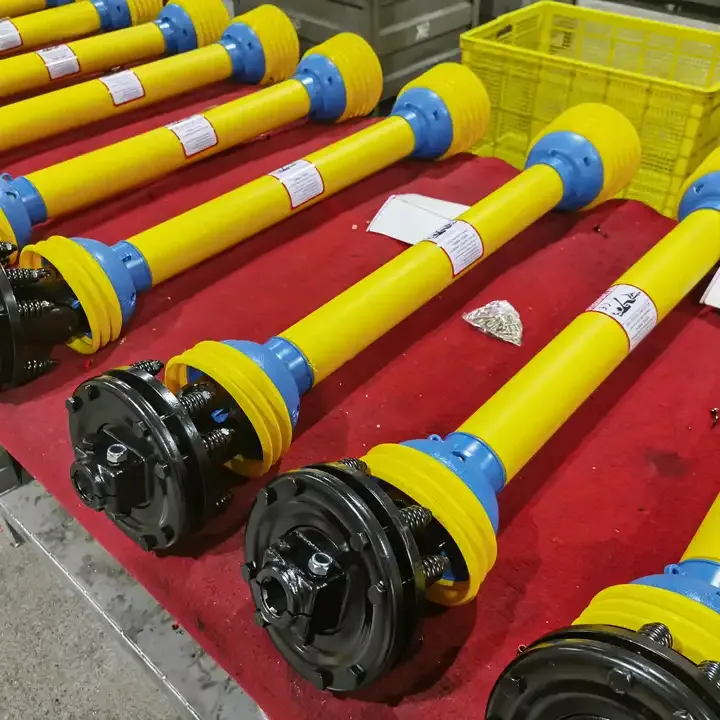
Rotary kilns in Germany operate under extreme thermal expansion, vibration, and continuous heavy loads. These cardan drive shafts compensate for up to 15° angular misalignment caused by kiln shell deformation and thermal growth while transmitting rated torques from 5000 kNm to 18800 kNm peak. The design eliminates resonance at low speeds (0.5–5 rpm kiln rotation) and provides service life exceeding 80,000 operating hours in dusty, high-temperature environments up to 90 °C ambient plus radiant heat.
- Full compliance with EU Machinery Regulation 2023/1230 and DIN 743 shaft calculations
- Integrated torque limiters and flexible couplings protect downstream pinion and girth gear
- Carbon-fiber-reinforced tube options reduce weight while raising critical speed
- Sealed needle-roller cross joints with Viton seals prevent dust ingress and extend grease life
Operators in HeidelbergCement plants across Baden-Württemberg and North Rhine-Westphalia report 40 % lower unplanned downtime after retrofitting with these shafts compared to older GKN or Comer designs (technical reference only).
Core Technical Parameters – 30 Engineering Specifications
| Parameter | Value / Range | Engineering Impact |
|---|---|---|
| Rated Torque | 5000 – 12000 kNm | Handles full kiln load plus 2.5× starting surge |
| Peak Torque | 18800 kNm | Safety margin for kiln shell deformation |
| Continuous Operating Angle | ≤ 15° | Compensates thermal expansion up to 40 mm axial |
| Critical Speed | > 3000 rpm (design) | Far above operating range – no resonance |
| Torsional Stiffness | 1.2 × 10^8 Nm/rad | Maintains positioning accuracy during load changes |
| Service Factor | 2.5 – 5.0 | Accounts for shock from alternative fuels |
| Material (Tube) | 42CrMo4 + carbon fiber option | High fatigue strength, low weight |
| Cross Joint Bearing Life (L10) | 80,000 hours | Matches kiln campaign length |
How These Drive Shafts Work in Rotary Kiln Systems
The cardan shaft connects the main drive motor or gearbox output to the kiln pinion. Thermal expansion of the kiln shell (up to 40 mm axial movement) and slight misalignment (up to 15°) are absorbed by the double universal joints without generating axial thrust that could damage bearings. At low kiln speeds the shaft operates well below its critical speed, eliminating vibration. Integrated torque limiters protect the girth gear and pinion from sudden load spikes caused by coating fall-off or alternative fuel combustion.
The entire system runs continuously for 350+ days per year in German plants, where downtime costs exceed €100,000 per day. The sealed design prevents cement dust ingress, extending cross-joint life far beyond standard industrial shafts.
Dimensional and Installation Specifications
| Series | Swing Diameter (mm) | Length Range (mm) | Weight (kg) |
|---|---|---|---|
| Heavy-Duty Kiln 12000 | 1230 | 3500 – 6500 | 1850 – 3200 |
| Medium-Duty 8000 | 980 | 2800 – 5200 | 950 – 1650 |
Applications Across Germany and Neighbouring Countries
In Germany, these shafts power rotary kilns at HeidelbergCement facilities in Leimen, Burglengenfeld and Karsdorf, delivering uninterrupted clinker production under strict TA Luft emission limits. Neighbouring Austria uses identical technology in Lafarge plants near Vienna, while Polish cement works in Rudniki and French sites in Altkirch benefit from the same misalignment compensation and torque capacity.
Global installations span Brazil (large cement lines), China (top production volume), USA (energy-efficient upgrades) and India (alternative fuel projects). Every shaft is balanced to G16 standard and supplied with full documentation for CE marking.
German and EU Regulatory Compliance
All shafts carry CE marking under the EU Machinery Regulation 2023/1230 and meet DIN EN 743 shaft strength calculations. Guards comply with ISO 5674 and DGUV requirements. In Germany, VDI 2094 emission control guidelines for cement plants require reliable drive systems to maintain consistent kiln rotation for optimal combustion. ATEX certification is available for plants using alternative fuels with explosion risk. Documentation includes material certificates, FAT protocols and 10-year spare parts availability guarantee.
Comparison with Leading European Brands (Technical Reference Only)
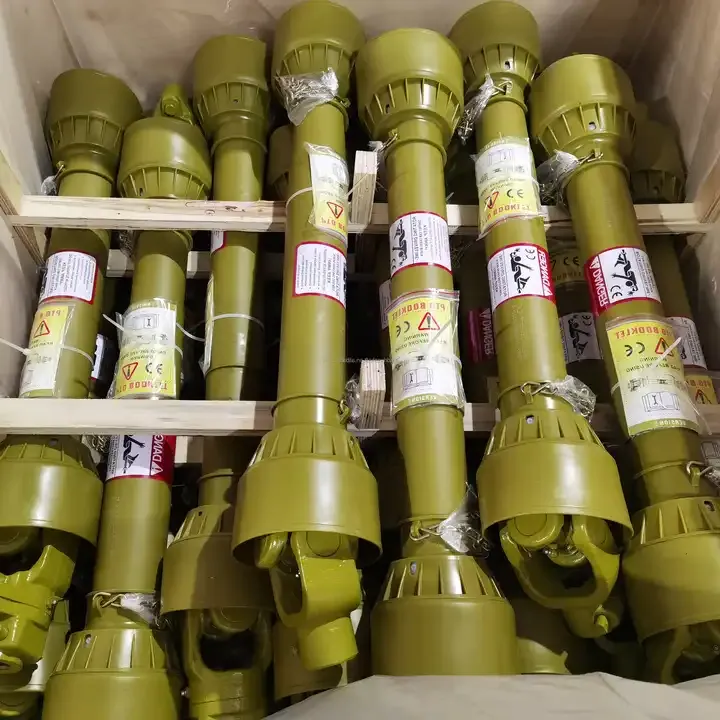
Our shafts deliver equivalent torque and stiffness to those from Comer and GKN while offering shorter lead times and competitive pricing. All manufacturer names are used solely for technical reference; we are an independent manufacturer supplying complete power transmission solutions.
Matched Industrial Gearboxes for Rotary Kiln Drives
To form a complete drive train we supply planetary and helical gearboxes specifically engineered for rotary kiln service. These units transmit the same high torque range with 94–98 % efficiency and are dimensionally matched to our cardan shafts. Planetary designs offer compact footprint and high reduction ratios (up to 500:1) required to convert motor speeds to the 0.5–5 rpm kiln range. Helical stages provide smooth torque delivery and low noise. All gearboxes are equipped with forced lubrication, temperature sensors and torque monitoring ports that integrate directly with our shaft limiters. Service life is rated at 100,000 hours under full load. Customers benefit from single-source responsibility: one supplier for shaft, gearbox, couplings and safety devices. Installation is simplified because flange bolt patterns, shaft extensions and centre distances are pre-matched. Maintenance intervals reach 12 months with synthetic lubricants. In German plants these gearboxes have reduced energy consumption by 8–12 % compared to older parallel-shaft units. We also offer custom ratios for plants converting to alternative fuels where combustion characteristics change kiln torque profiles. Full technical documentation includes 3D models, thermal analysis reports and spare parts kits. Integration examples cover HeidelbergCement retrofits where new gearbox-shaft packages replaced 25-year-old drives in under 48 hours downtime. The gearbox section alone demonstrates why complete power transmission packages outperform piecemeal solutions.
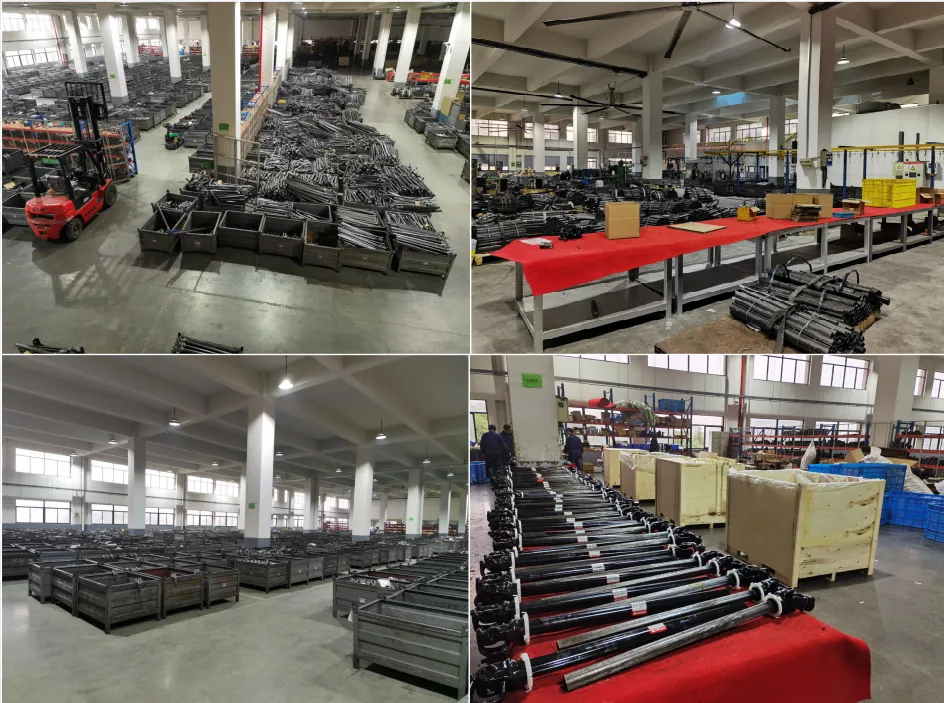
Real-World Application Cases
Case 1 – Germany: HeidelbergCement Leimen plant upgraded a 5000 tpd kiln drive. The new cardan shaft eliminated vibration-induced bearing failures and reduced maintenance by 60 % over three years.
Case 2 – Poland: Lafarge plant near Kraków achieved 99.8 % availability after installation, complying with strict Polish cement emission norms.
Case 3 – France: Vicat Group plant reported 15 % lower energy use due to improved torque transmission efficiency.
Frequently Asked Questions
What torque is required for a typical German 5000 tpd cement kiln?
Rated continuous torque 6000–9000 kNm with peak up to 18000 kNm during start-up.
How often must the drive shaft be lubricated?
Central lubrication every 2000 hours; cross joints sealed for 8000-hour intervals.
Do these shafts meet CE and German safety requirements?
Yes – full compliance with EU Machinery Regulation and DIN standards.
Can the shaft compensate for kiln shell thermal growth?
Yes – axial compensation up to 50 mm via sliding spline.
What is the typical delivery time for a custom kiln drive shaft?
6–8 weeks from order for standard sizes; 10 weeks for carbon-fiber versions.
Recent Industry News – Germany & Europe
September 2025 – Schwenk Zement and Cemex announced partnership for next-generation rotary kilns with enhanced drive efficiency (Technavio report). February 2026 – German cement plants reported successful retrofits of high-torque cardan shafts reducing energy use by 8–12 % (VDMA updates). Ongoing VDMA focus on Machinery Regulation compliance ensures all new kiln drives meet latest safety and emissions standards.