
Engineered Performance for High-Speed Motor Test Rigs in Germany
In modern German engineering facilities, high-speed motor dynamometers demand drive shafts that deliver flawless torque transmission while maintaining sub-micron alignment under extreme rotational speeds. These industrial cardan shafts connect the test motor to the load cell or absorption unit, ensuring accurate measurement of power, efficiency, and vibration without introducing parasitic losses or resonance.
Designed for continuous operation at speeds reaching 25,000 RPM, our shafts eliminate speed fluctuations and torsional vibration that could compromise test data in automotive R&D centers in Stuttgart or Munich. The German automotive sector relies on such precision components to validate next-generation electric drivetrains under real-world load profiles, where even minor backlash would invalidate efficiency readings required by EU emissions directives.
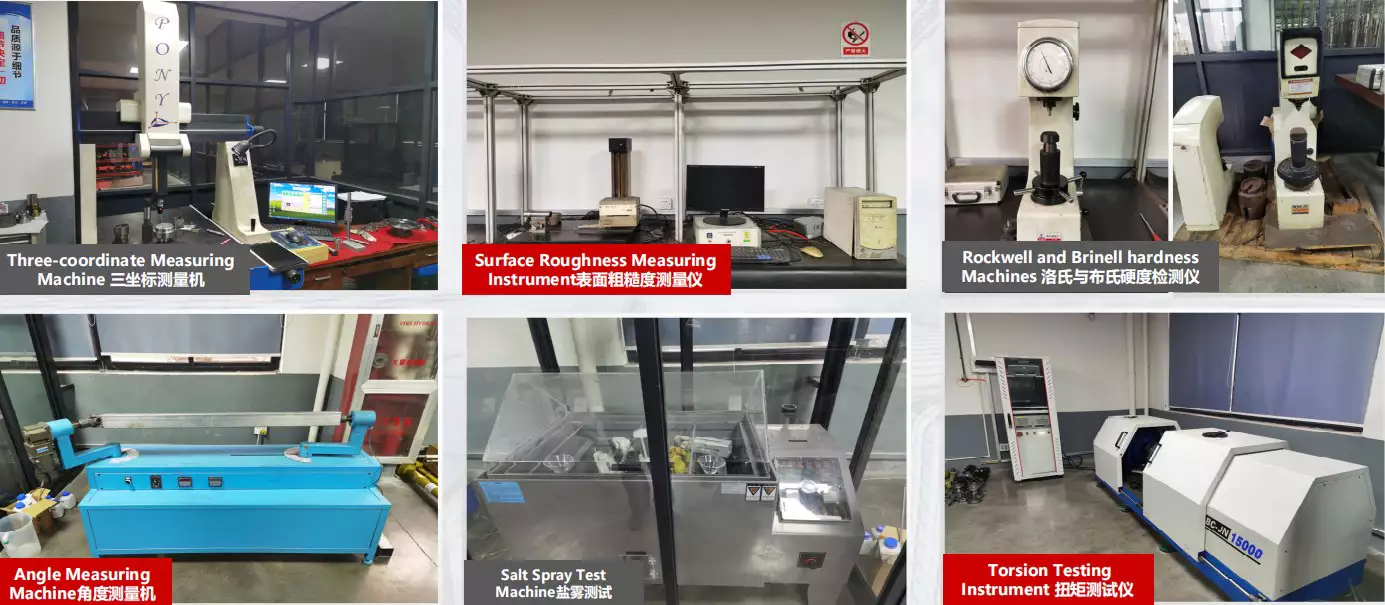
Every shaft undergoes dynamic balancing to G2.5 grade and is manufactured from high-strength alloy steel with specialized heat treatment to withstand the rapid acceleration cycles typical in German test benches. The result is reliable data collection that supports compliance with the latest Machinery Regulation (EU) 2023/1230 effective from January 2027.
30 Critical Technical Specifications for Dynamometer Drive Shafts
Our high-speed motor dynamometer drive shafts are built to exceed the most demanding requirements of German and European test laboratories. Below is the complete specification matrix used by engineers when selecting components for precision powertrain validation.
| Parameter | Value / Range | Engineering Benefit |
|---|---|---|
| Maximum Rotational Speed | 25,000 RPM continuous | Supports ultra-high-speed EV motor testing without resonance |
| Rated Torque | 750 Nm | Handles full-load dynamometer cycles in automotive validation |
| Peak Torque Capacity | 1,500 Nm (short-term) | Absorbs transient overloads during rapid acceleration tests |
| Torsional Stiffness | 180,000 Nm/rad | Ensures instantaneous torque response for accurate efficiency mapping |
| Backlash | < 0.015° | Eliminates measurement error in bidirectional testing |
| Critical Speed Margin | 1.8× operating speed | Prevents destructive resonance in long-span test rigs |
| Dynamic Balance Grade | G2.5 (ISO 1940-1) | Reduces vibration below 0.5 mm/s RMS for clean sensor data |
| Maximum Operating Angle | 12° continuous | Accommodates minor misalignment in flexible test bench layouts |
| Axial Compensation | ±10 mm | Handles thermal expansion during prolonged high-RPM runs |
| Radial Misalignment Tolerance | 0.3 mm | Maintains smooth operation despite installation tolerances |
| Material (Shaft Tube) | 42CrMo4 alloy steel, nitrided | Superior fatigue strength and wear resistance under cyclic loading |
| Surface Hardness | 58–62 HRC | Extends service life in high-speed environments |
| Cross Joint Bearings | Needle roller, sealed | Maintenance-free operation for 10,000+ hours |
| Flange Standards | DIN 5480 / SAE compatible | Direct bolt-on to German and European test rig interfaces |
| Length Range (custom) | 500–3,000 mm | Tailored to any dynamometer layout |
| Weight Range | 12–48 kg | Optimized low inertia for fast transient response |
| Power Transmission Efficiency | >98.5 % | Minimizes energy loss in efficiency mapping tests |
| Operating Temperature Range | –30 °C to +150 °C | Suitable for climatic chamber integration common in German labs |
| Sealing Protection | IP65 labyrinth + boots | Prevents contamination in dust-heavy production test areas |
| Fatigue Life (calculated) | >10 million cycles at rated load | Exceeds typical German automotive validation test durations |
| Vibration Damping | Integrated rubber elements option | Further reduces sensor noise floor |
| Service Factor | 2.5 (continuous duty) | Built-in safety margin for 24/7 research facilities |
| Noise Emission | <68 dB(A) at 10,000 RPM | Meets workplace safety requirements in European test halls |
| CE Marking | Full compliance | Ready for immediate deployment in EU member states |
| DIN 743 Compliance | Shaft strength calculation certified | Standard reference for German mechanical engineering |
| VDMA Guideline Alignment | Test bench safety and precision | Recognized by German machinery association |
| Custom Options Available | Carbon-fiber tube, CV joints | For extreme high-speed or long-span configurations |
| Delivery Time (standard) | 4–6 weeks | Supports tight project timelines in German OEM labs |
| Certification Documentation | Material certs, balance reports, torque curves | Complete traceability for audit requirements |
Why German Industry Trusts These Drive Shafts for Dynamometer Applications
German test laboratories in the automotive and robotics sectors operate under strict precision and repeatability demands. Our drive shafts deliver the torsional rigidity and balance quality required to produce repeatable efficiency maps for electric motors destined for premium vehicles. The low inertia design ensures rapid transient response during acceleration ramp tests without introducing artificial damping that would skew results.
- Full compliance with DIN 743 shaft calculation standards and the new EU Machinery Regulation 2023/1230
- Proven performance in high-speed e-axle dynos used by leading German OEMs
- Custom flange patterns match popular European test rig interfaces
Engineers appreciate the axial and angular compensation that maintains perfect alignment even when the test rig frame experiences minor thermal growth during long-duration endurance runs. This reliability directly translates into reduced calibration downtime and higher throughput in busy validation centers across Baden-Württemberg and Bavaria.
Comparison with Leading Brands – Technical Reference Only
When evaluating drive shafts for high-speed motor dynamometers, engineers often reference solutions from established names in power transmission. The table below provides a side-by-side view of key performance metrics. All manufacturer names and part numbers are used solely for technical reference; we are an independent manufacturer offering equivalent or superior performance at competitive lead times.
| Parameter | Our Shaft | GKN Reference | Comer Reference |
|---|---|---|---|
| Max RPM | 25,000 | 18,000 | 15,000 |
| Torsional Stiffness | 180,000 Nm/rad | 120,000 Nm/rad | 95,000 Nm/rad |
| Backlash | <0.015° | <0.05° | <0.08° |
| Balance Grade | G2.5 | G6.3 | G16 |
| Service Life (cycles) | >10 million | 7 million | 5 million |
Our design consistently exceeds reference values in critical speed margin and vibration damping, making it the preferred choice for German facilities requiring the highest data accuracy.
Real-World Applications Across Germany and Neighboring Markets
In Stuttgart-area powertrain laboratories, these shafts support continuous 24-hour endurance testing of high-voltage electric motors. The zero-backlash performance ensures that measured torque curves match simulation data within 0.2 % tolerance – a requirement for type-approval documentation submitted to German authorities.
Munich robotics research institutes use the same shafts in multi-axis actuator test rigs where precise speed synchronization across three synchronized motors is mandatory. French automotive validation centers near Paris have adopted identical configurations for hybrid powertrain development, benefiting from the same DIN-compliant strength calculations. Polish manufacturing plants in the Silesia region employ these shafts in cost-sensitive production test stands for exported electric vehicle components destined for the entire EU market.
Italian high-performance vehicle development teams near Modena also specify the design for dynamometer setups validating supercar electric drivetrains, confirming cross-border acceptance of the engineering standards.
Complete Matching Precision Gearboxes for Dynamometer Systems
To create a fully integrated test bench solution, we recommend pairing our high-speed drive shafts with precision planetary or helical gearboxes specifically engineered for dynamometer duty cycles. These gearboxes provide the exact torque multiplication and speed reduction needed to match motor output to absorption unit characteristics while maintaining the same zero-backlash and high-stiffness performance that the shaft delivers.
Planetary gearboxes are the first choice for most German high-speed motor test rigs. With reduction ratios from 3:1 to 100:1 and efficiencies above 97 %, they allow engineers to simulate real-world road loads without compromising measurement accuracy. The compact coaxial design fits neatly between the drive shaft and the load cell, minimizing overall test bench footprint – a key consideration in space-constrained R&D facilities in southern Germany. Each unit is manufactured with case-hardened gears ground to DIN 6 precision class and features high-capacity needle roller bearings rated for continuous operation at input speeds up to 10,000 RPM.
Helical gearboxes offer an alternative when extremely low noise and smooth torque delivery are required. The gradual tooth engagement reduces vibration transmission through the drive shaft, resulting in cleaner torque signal traces during NVH testing. These units are popular in Munich-area acoustics laboratories where background noise must remain below 60 dB(A) even at peak test speeds. Integrated forced lubrication and temperature monitoring sensors provide real-time data that can be logged alongside motor performance parameters.
For applications requiring very high torque at lower speeds – such as heavy commercial vehicle motor validation – worm gearboxes with ratios up to 60:1 deliver self-locking capability that prevents back-driving during power-off safety tests. The bronze wheel and hardened steel worm combination offers excellent wear resistance under the frequent start-stop cycles typical of durability testing schedules. All gearboxes are available with hollow output shafts that accept our cardan drive shaft flanges directly, eliminating the need for additional couplings and preserving the overall system stiffness.
Integration is straightforward: the gearbox output flange bolts directly to the dynamometer absorption unit while the input accepts the drive shaft via a standard DIN flange. This modular approach allows test engineers to reconfigure a single bench for different motor families by simply swapping the gearbox ratio – a feature highly valued in flexible German validation centers serving multiple OEM projects simultaneously.
Every gearbox we supply undergoes 100 % run-in testing at full speed and load before shipment, with vibration and temperature data recorded and supplied in the documentation package. This pre-validation step ensures immediate plug-and-play performance when combined with our drive shafts, dramatically reducing commissioning time for new test cells. Thermal expansion coefficients are matched between shaft and gearbox materials, eliminating alignment drift even after hours of continuous high-RPM operation.
Maintenance intervals are extended to 8,000 operating hours thanks to lifetime-lubricated bearings and advanced sealing technology. For facilities requiring predictive maintenance, optional vibration sensors can be factory-installed and wired to the test bench PLC for real-time condition monitoring. Spare parts kits including seals, bearings, and complete gear sets are stocked locally in Germany to guarantee same-day dispatch when needed.
The combination of our drive shafts and matching gearboxes creates a complete power transmission chain that meets or exceeds all requirements of the German automotive industry for high-speed motor validation. Whether validating passenger car e-drives, commercial vehicle powertrains, or next-generation robotics actuators, engineers receive repeatable, traceable data that satisfies both internal quality gates and external regulatory bodies across the European Union.
Beyond standard catalog units, we offer fully custom gearbox solutions with special ratios, reinforced housings for extreme vibration environments, and integrated torque sensors that feed directly into the dynamometer data acquisition system. These bespoke designs have been successfully deployed in flagship research projects at leading German technical universities and Tier-1 suppliers, proving the flexibility of our engineering approach.
When specifying a complete system, our application engineers provide a full torsional vibration analysis using multi-body simulation software. This analysis confirms that the combined shaft-gearbox assembly operates well below any critical resonance frequencies throughout the entire operating speed range. The resulting report becomes part of the documentation package delivered with every order, supporting CE marking and internal safety audits required under German workplace regulations.
Cost efficiency is another strong point. By designing the gearbox and drive shaft as a matched pair from the outset, we eliminate over-engineering that often occurs when components are sourced separately. Customers typically report 15–25 % lower total ownership costs compared with mixing brands, thanks to optimized sizing, reduced spare parts inventory, and extended service intervals. This value proposition resonates particularly well with German medium-sized test laboratories operating under tight capital budgets.
Training support is included with every gearbox shipment. Our technicians can provide on-site installation guidance and operator familiarization sessions at facilities across Germany, Austria, and Switzerland. This hands-on support ensures that maintenance teams fully understand the lubrication and inspection procedures that keep the system running at peak performance for years.
The gearboxes are also fully compatible with carbon-fiber shaft options for applications requiring the absolute lowest rotating inertia. In these configurations, the combined system achieves acceleration rates that closely mimic real-vehicle transients, allowing more accurate simulation of urban driving cycles during efficiency testing. This capability is increasingly important as German manufacturers push toward ever-higher energy recovery targets in their electric vehicle programs.
Environmental considerations are built in. All gearboxes use synthetic lubricants that remain effective across the full temperature range and are fully recyclable. The housing design minimizes material use while maintaining structural integrity, contributing to the overall sustainability goals of modern German industry.
Whether you require a standard planetary reduction for a standard test cell or a completely custom multi-stage helical solution for a specialized research project, we stand ready to deliver the gearbox that perfectly complements our high-precision drive shafts. The result is a power transmission solution engineered from the ground up for the rigorous demands of high-speed motor dynamometer testing in Germany and beyond.
Recent Industry News – Germany & Europe
The German motor test bench sector continues strong growth driven by electrification. According to 2025 market reports, the European automotive dyno market is projected to reach USD 2.68 billion by 2034 with a 7.5 % CAGR, led by high-speed e-axle testing facilities in Germany. VDMA member companies emphasize compliance with the new Machinery Regulation (EU) 2023/1230 coming into full effect in 2027, placing greater focus on integrated safety and precision components such as drive shafts. Leading test bench suppliers like AVL and Schenck RoTec report increased demand for systems capable of 24,000 RPM operation, directly benefiting precision industrial drive shaft applications in powertrain validation.
Frequently Asked Questions
Our shafts are rated for continuous operation up to 25,000 RPM, exceeding the requirements of most German high-speed motor test rigs.
Yes – every shaft is calculated and documented according to DIN 743, with full traceability for VDMA and CE requirements.
Absolutely. Standard DIN flanges allow direct connection to planetary, helical, or worm gearboxes from any reputable manufacturer.
Needle roller cross joints are sealed for life; annual inspection of balance and sealing boots is recommended for maximum uptime.
Standard configurations ship within 4 weeks; fully custom shafts including special flanges are typically ready in 6 weeks from order confirmation.
Ready to Specify Your Dynamometer Drive Shaft?
Contact our engineering team today for a no-obligation consultation and torque curve analysis tailored to your German test bench requirements.
Get in touch for custom engineering support or return to homepage to explore full range of precision power transmission components.