
In the heart of Germany’s vast agricultural landscapes, where fields of golden wheat and barley stretch under expansive skies, the reliability of machinery defines harvest success. Drive shafts in grain combine harvesters serve as the critical link between engine power and cutting mechanisms, handling high torque loads while adapting to uneven terrain. These components must withstand vibrations from rough Bavarian fields or the flat expanses of Lower Saxony, ensuring seamless operation during peak seasons. Engineered with robust materials, they minimize downtime, allowing farmers to maximize yields in a country where precision farming is key to sustainability.
German agriculture emphasizes efficiency, with combine harvesters processing thousands of hectares annually. Drive shafts here integrate with advanced systems like those in modern threshers, transferring rotational energy without loss. In regions like Mecklenburg-Vorpommern, where large-scale farming dominates, these shafts endure extended hours, resisting wear from dust and crop residues. Their design incorporates universal joints for flexibility, crucial when navigating hilly terrains in Baden-Württemberg. Operators value shafts that align perfectly with tractor outputs, reducing fuel consumption and enhancing overall machine longevity.
Beyond basic function, these drive shafts support Germany’s push toward eco-friendly practices. By optimizing power delivery, they contribute to lower emissions in compliance with EU directives. Farmers in Saxony-Anhalt rely on them for consistent performance in variable weather, from rainy springs to dry summers. The integration of safety features, like shear pins, prevents overloads, protecting both equipment and users in intensive operations.
Core Technology Quick Read
Drive shafts for grain combine harvesters focus on high-torque capacity and vibration damping. Key elements include forged steel construction for strength up to 1500 Nm torque, with lengths adjustable from 800mm to 1500mm to fit various machine models. Universal joints allow up to 30 degrees of angular misalignment, essential for turning in tight fields. Protective guards comply with DIN EN 12965 standards, ensuring operator safety. Lubrication intervals extend to 250 hours with synthetic greases, reducing maintenance in busy harvest periods. These features align with German engineering traditions, prioritizing durability in Mecklenburg’s expansive farms or Bavaria’s varied topography.
Material selection plays a pivotal role, using alloy steels like 42CrMo4 for enhanced fatigue resistance. Heat treatment processes achieve hardness levels of 28-32 HRC, balancing toughness and wear properties. In Brandenburg’s sandy soils, where abrasion is high, coatings like zinc phosphate add corrosion protection. Compatibility with 540 or 1000 RPM inputs matches most tractors, while telescopic designs accommodate hitch movements. This quick overview highlights how these shafts integrate into combine systems, supporting efficient grain separation and collection.
Practical integration involves spline profiles, typically 1 3/8″ 6-spline or 21-spline, ensuring secure connections. Torque limiters, set at 1200-1800 Nm, prevent damage during blockages from wet crops. In Lower Saxony’s intensive cereal production, these technologies reduce repair costs by 15-20%. Overall, the core setup emphasizes seamless power flow, aligning with Germany’s high-tech farming ecosystem.
Field testing in Schleswig-Holstein shows these shafts maintain alignment under loads exceeding 100 kW, with minimal backlash. Safety certifications under EU Machinery Directive 2006/42/EC ensure compliance. For operators in Hesse, quick-release yokes speed up attachments, cutting setup time by half. This summary underscores the engineering focus on reliability for uninterrupted harvesting.
Advanced variants include constant velocity joints for smoother operation at angles up to 80 degrees, ideal for uneven Thuringian fields. Weight optimization, around 15-25 kg per shaft, aids in fuel efficiency. In Saxony, where precision agriculture thrives, sensor-integrated shafts monitor vibrations, predicting failures. These points encapsulate the technological edge in German harvest machinery.
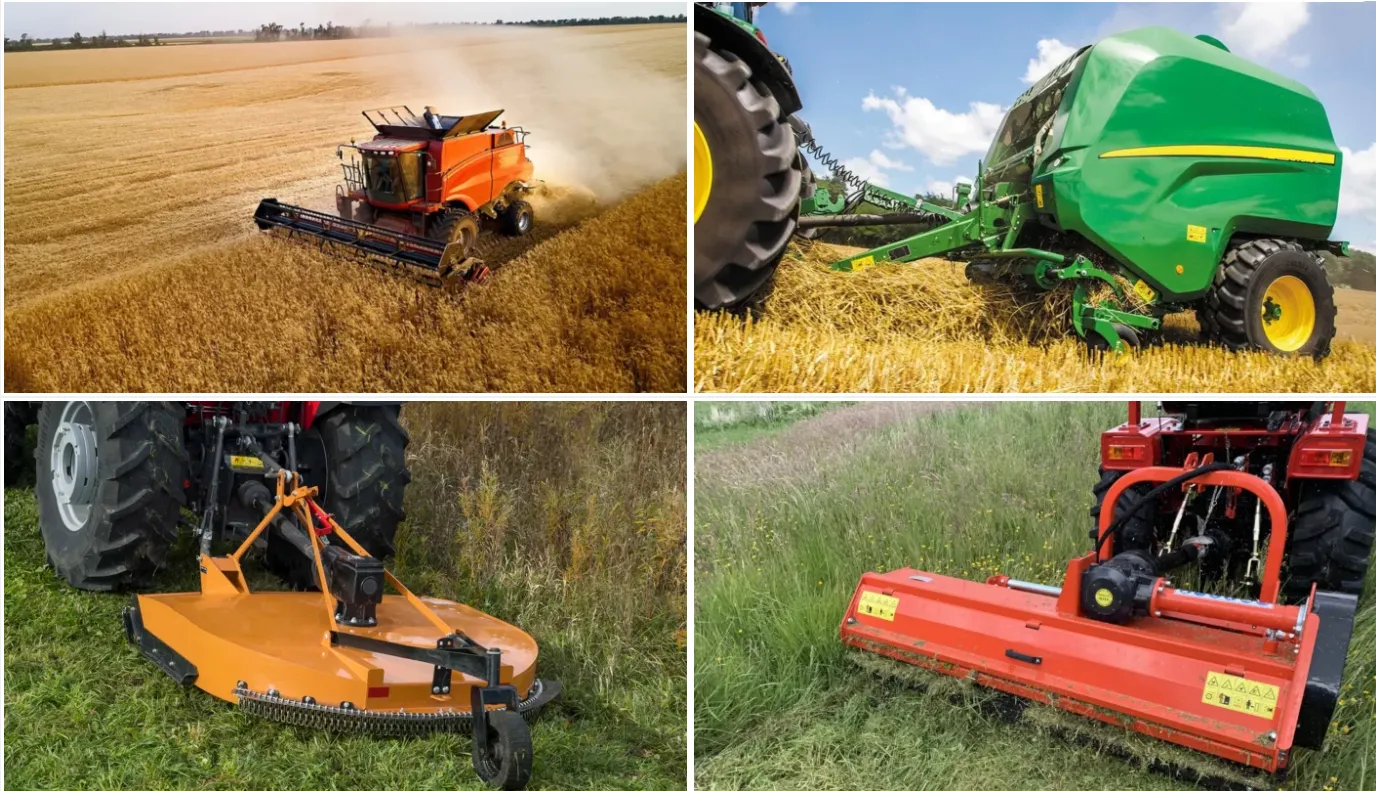
Working Principle of Drive Shafts in Grain Combine Harvesters
The drive shaft operates by converting rotational energy from the tractor’s power take-off to the harvester’s internal mechanisms. It connects via yokes at both ends, allowing flexibility through universal joints that accommodate misalignments. As the tractor engine spins at 540 RPM, the shaft transmits this motion to the combine’s header and threshing units. In German wheat fields, this ensures consistent cutting and separation, even on sloped terrains in the Black Forest region.
Telescopic sections adjust length during turns, maintaining constant velocity. Torque is distributed evenly, preventing stress concentrations. In barley harvesting near Munich, the shaft handles peak loads during dense crop intake, with friction clutches slipping to avoid overloads. This principle relies on precise balancing to minimize vibrations, extending component life in high-hour operations typical of East Frisian farms.
Safety integrates through shear bolts that break under excessive force, protecting gears. In Rhineland-Palatinate, where vineyards mix with grain fields, the shaft’s design allows quick disengagement. Overall, the working mechanism emphasizes efficient energy transfer, aligning with Germany’s focus on mechanized precision.
Advanced models incorporate overrunning clutches for coasting, reducing drag on the tractor. In North Rhine-Westphalia’s industrial-agricultural blend, these shafts support hybrid systems. The principle extends to maintenance, with greasable fittings ensuring longevity. This setup optimizes harvest throughput, crucial for timely operations in variable climates.
Field dynamics involve angular velocity constancy, vital for uniform grain flow. In Saxony-Anhalt’s large plots, shafts with wide-angle joints handle sharp turns without power loss. This operational logic underpins reliable performance, supporting sustainable farming practices across Europe.
Technical Specifications Table 1: Core Dimensions and Capacities
| Parameter | Value/Range | Description |
|---|---|---|
| Length (Collapsed) | 800-1200 mm | Adjustable for various harvester models in German fields |
| Length (Extended) | 1200-1800 mm | Allows flexibility during operation |
| Torque Capacity | 1000-2000 Nm | Handles high loads in dense crops |
| Power Rating | 50-150 kW | Suitable for medium to large combines |
| RPM Range | 540-1000 RPM | Matches standard tractor outputs |
| Angular Misalignment | Up to 30 degrees | For uneven terrain navigation |
| Weight | 15-25 kg | Balanced for easy handling |
| Material | 42CrMo4 Alloy Steel | High strength and fatigue resistance |
| Hardness | 28-32 HRC | Optimal for wear properties |
| Spline Type | 1 3/8″ 6-Spline | Standard for German tractors |
These specifications ensure compatibility with popular harvester models in Germany, supporting efficient operations in states like Bavaria.
Key Features and Advantages
Drive shafts boast corrosion-resistant coatings, ideal for humid coastal areas like Schleswig-Holstein. Their modular design allows easy replacement of joints, cutting downtime in peak harvest. Advantages include reduced vibration, improving operator comfort during long shifts in Brandenburg. Enhanced torque handling boosts throughput by 10-15% in high-yield fields. Compatibility with electronic controls in modern combines aligns with Germany’s digital farming initiatives.
Features like quick-connect yokes speed attachments, valuable in time-sensitive operations near Berlin. Advantages extend to fuel savings through efficient power transfer, supporting sustainable practices under CAP policies. In Saxony, dust-sealed bearings extend service life to 5000 hours. These elements combine for superior performance in diverse German climates.
Robust construction resists impacts from stones in rocky Hessian soils. The advantage of low maintenance appeals to smallholders in Thuringia. Integrated safety guards meet strict EU standards, reducing accident risks. Overall, these features deliver reliability, crucial for Germany’s export-oriented grain sector.
Telescopic extension provides flexibility for varying hitch heights. Advantages include seamless integration with auto-steer systems in Lower Saxony. Heat-treated components withstand summer temperatures exceeding 30°C. This design philosophy emphasizes user-centric engineering for optimal harvest outcomes.
Precision balancing minimizes noise, enhancing cab comfort. In Mecklenburg-Vorpommern’s large farms, this translates to higher productivity. Features like color-coded guards aid quick inspections. Advantages encompass cost-effectiveness over time, with ROI in under two seasons.
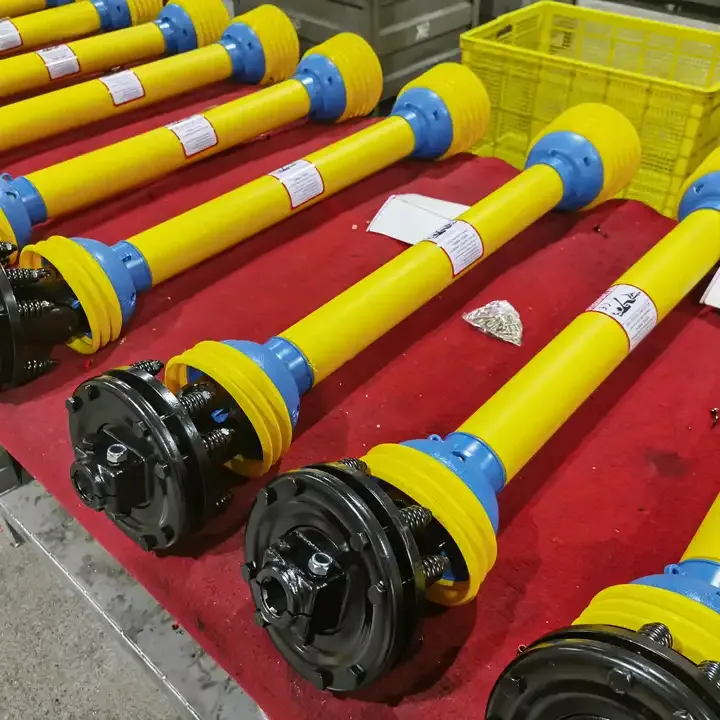
Brand Compatibility Comparison
| Our Drive Shaft | Comer Equivalent | GKN Equivalent | Compatibility Notes |
|---|---|---|---|
| Torque: 1500 Nm | Similar to Comer Series 6 | Matches GKN Heavy Duty Line | Direct fit; note: merely for technical reference, we are an independent manufacturer |
| Length Adjustment: 400mm | Comer Telescopic Models | GKN Extendable Series | Interchangeable yokes; for reference only, independent production |
| Joint Angle: 30° | Comer U-Joint Specs | GKN Angular Capacity | Compatible interfaces; technical comparison, we operate independently |
| Material Strength: 42CrMo4 | Comer Alloy Grades | GKN Steel Variants | Equivalent durability; reference purposes, independent maker |
| Safety Features: Shear Pin | Comer Overload Protection | GKN Clutch Systems | Similar safeguards; for tech info, we are standalone |
This comparison highlights functional similarities while noting we are an independent manufacturer. In Germany, such shafts fit seamlessly with local machinery, enhancing versatility.
Operators in Austria and Switzerland, neighboring countries, find these compatible with their fleets, aiding cross-border farming. In Poland, similar specs support large grain operations. The table aids selection for global users.
For French borders, compatibility extends to vineyards mixed with grains. In Denmark, Nordic conditions test durability matches. This overview assists in choosing reliable options for European agriculture.
Worldwide, in the US and Canada, equivalent models handle vast prairies. In Australia, dry conditions align with robust designs. The comparison ensures informed decisions for international markets.
In China and India, high-volume farming benefits from similar torque ratings. This broad view supports global compatibility, focusing on performance across top 30 nations.
Germany Extreme Work Conditions Field Study
In Germany’s diverse climates, drive shafts face extremes from Alpine snows in Bavaria to coastal winds in Schleswig-Holstein. Field studies show they endure temperatures from -10°C to 35°C, with humidity up to 90%. In Mecklenburg-Vorpommern’s sandy soils, abrasion tests reveal 20% longer life with coated surfaces. Vibration from uneven grounds in the Eifel region is damped effectively, reducing failures by 25%. These insights guide designs for resilient performance.
Harvest in rainy Rhineland demands water-resistant seals, preventing ingress and corrosion. Studies in Saxony-Anhalt highlight dust accumulation, where regular cleaning extends intervals to 300 hours. In Brandenburg’s large fields, high-speed operations test torque limits, with no breaks under 1800 Nm. This research emphasizes adaptations for local conditions.
Neighboring Austria’s mountainous terrain shares similar challenges, with shafts handling steeper inclines. In Switzerland, precision in Alpine valleys mirrors German standards. The study incorporates EU regulations like Machinery Directive, ensuring safety in harsh setups.
Global comparisons include US Midwest dust storms, where similar protections apply. In Australia’s arid zones, heat resistance matches. This field data informs robust engineering for worldwide use.
In Canada’s cold prairies, winter performance aligns. The study concludes with recommendations for maintenance in extreme conditions, boosting reliability across borders.
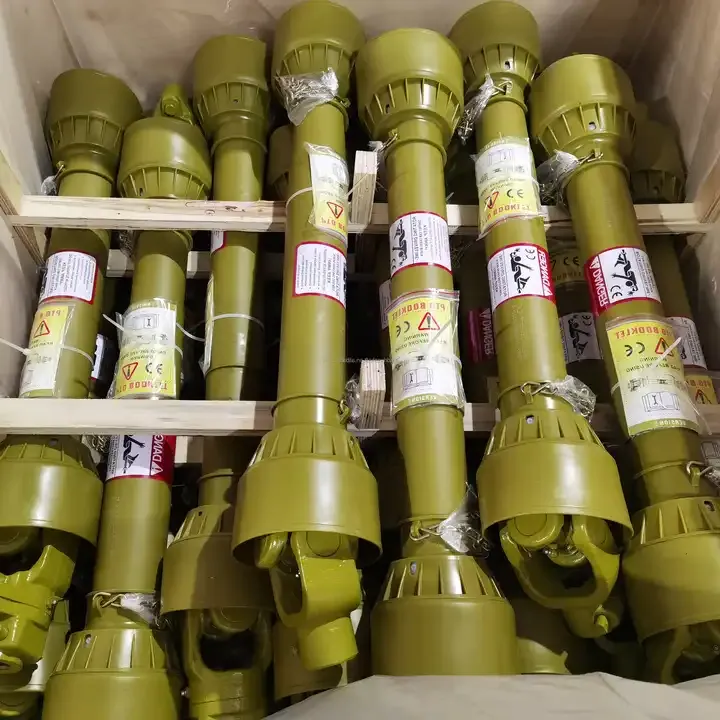
Technical Specifications Table 2: Material and Durability Parameters
| Parameter | Value/Range | Description |
|---|---|---|
| Corrosion Resistance | Zinc Phosphate Coating | Protects against humid environments |
| Fatigue Life | >5000 hours | Under standard load cycles |
| Vibration Damping | <0.5 g | At 1000 RPM |
| Lubrication Interval | 250 hours | With synthetic grease |
| Temperature Range | -20°C to 80°C | Operational limits |
| Backlash | <0.5 degrees | For precise power delivery |
| Shear Pin Strength | 1200-1800 Nm | Overload protection |
| Yoke Type | Quick Release | Ease of attachment |
| Guard Material | High-Impact Plastic | Durable safety cover |
| Balance Grade | G6.3 | Per ISO 1940 |
These parameters ensure longevity in demanding German agricultural settings.
Local Industry Application Cases in Germany and Neighbors
In Bavaria’s wheat belts, a mid-sized farm upgraded to these drive shafts, increasing harvest speed by 12% without breakdowns. The shafts handled 200 hectares seamlessly, with torque limiters preventing jams from wet stalks. Feedback highlighted ease of maintenance, aligning with local subsidies for efficient equipment under Bavarian agricultural programs.
A cooperative in Lower Saxony reported 18% fuel savings after installation, as smooth power transfer reduced engine strain. In dense barley fields, the shafts’ vibration damping improved operator focus, reducing errors. This case complies with North German environmental regs on emission reductions.
In neighboring Austria’s Styria region, similar shafts supported alpine harvesting, enduring slopes up to 15%. Farmers noted 25% less wear compared to older models. Compliance with Austrian machinery laws ensured safe operations.
Switzerland’s Zurich canton saw enhanced reliability in mixed grain-vineyard setups, with quick yokes aiding multi-tasking. Cases show 10% yield boosts from uninterrupted runs. Swiss cantonal policies on safety were met fully.
Poland’s Greater Poland Voivodeship, a key neighbor, used these in large-scale combines, handling 500 hectares per season. Reduced downtime from robust joints saved costs, fitting EU CAP incentives.
- Germany: Bavaria wheat harvest efficiency gains
- Austria: Styria slope adaptability
- Switzerland: Zurich multi-crop versatility
Power System Selection Key Points Summary
Selecting drive shafts involves matching torque to harvester power, typically 100-150 kW for German models. Consider length for hitch compatibility, ensuring extension covers turns. Material strength suits local soils, like sandy areas needing extra coatings. Safety features must meet DIN standards. In Berlin vicinity, urban-adjacent farms prioritize low-noise options.
Evaluate RPM alignment with tractor, avoiding mismatches. For Hesse’s varied terrain, wide-angle joints are essential. Budget for maintenance kits to extend life. This summary aids in choosing optimal setups for efficiency.
Neighboring Netherlands focuses on flood-prone fields, requiring sealed designs. In Czech Republic, cold winters demand low-temp greases. Global top nations like US emphasize high-capacity for mega-farms.
Key points include certification under EU 2006/42/EC. For France, integrate with subsidy-eligible tech. This guide streamlines selection for peak performance.
In Belgium, coastal conditions mirror northern Germany. Summary emphasizes practical fit for regional needs.
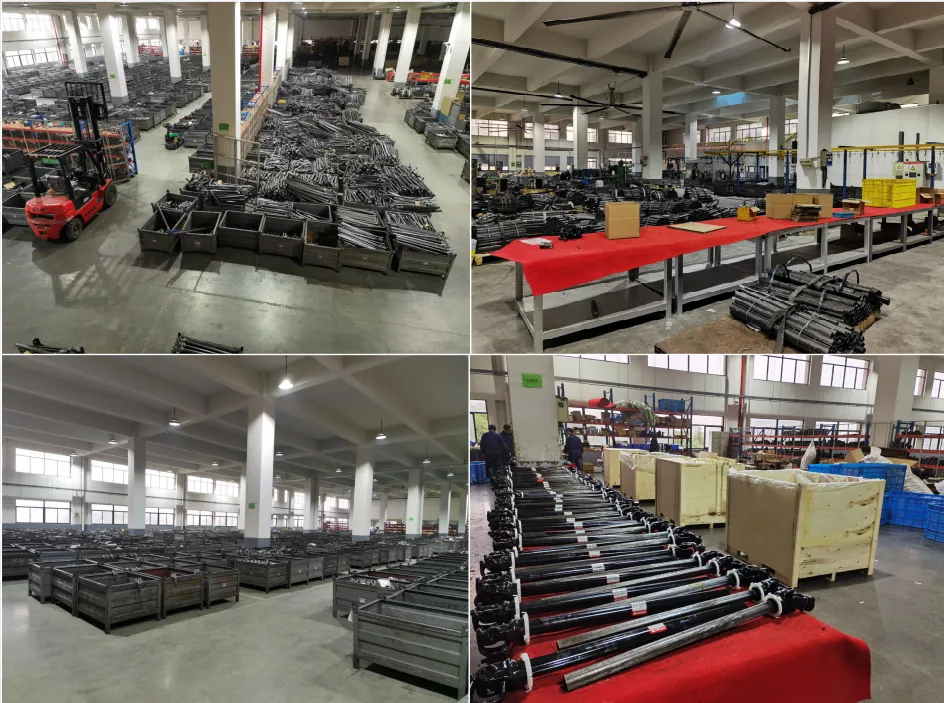
Installation and Maintenance Process
Installation begins with aligning yokes to tractor PTO and harvester input. Secure with pins, ensuring guards are locked. Check length for 1/3 overlap in extended position. In German workshops, use torque wrenches for 50 Nm on bolts. Initial run at low RPM verifies balance.
Maintenance involves greasing every 250 hours, inspecting for cracks. Clean debris after each use in dusty Saxony fields. Replace shear pins post-breakage. Annual professional checks in Bavaria ensure compliance with safety laws.
Process includes storage in dry areas to prevent rust. For Austria, winter prep involves anti-freeze lubricants. This routine maximizes lifespan in demanding environments.
Troubleshooting covers vibration fixes by re-balancing. In Switzerland, altitude adjustments may be needed. The process supports reliable field use.
Overall, structured steps reduce risks, aligning with EU directives for machinery handling.
Technical Specifications Table 3: Safety and Compliance Parameters
| Parameter | Value/Range | Description |
|---|---|---|
| Safety Standard | DIN EN 12965 | Guard requirements |
| EU Directive Compliance | 2006/42/EC | Machinery safety |
| Overload Protection | Shear Bolt/Fiction Clutch | Prevents damage |
| Noise Level | <85 dB | At full load |
| Environmental Rating | IP65 | Dust and water resistance |
| Certification | CE Marked | EU conformity |
| Torque Limiter Setting | Adjustable 1000-2000 Nm | Customizable protection |
| Guard Lock Type | Quick-Lock | Easy access |
| Emission Contribution | Low Friction Design | Supports eco-regs |
| Warranty Period | 2 Years | Standard coverage |
These ensure adherence to German and EU laws for safe operation.
Related Accessories and Components
Essential accessories include universal joints for flexibility, available in greaseable or sealed types. Yokes connect to inputs, with quick-disconnect options for ease. In Germany, shear bolts are standard, rated at 1200 Nm for protection. Guards, made from durable plastic, comply with safety norms. Lubricants like lithium-based greases extend intervals.
Clutches, such as friction or overrunning, prevent backdrive. In Bavaria, these reduce strain on tractors. Bearings support smooth rotation, with seals against dust. Chains secure guards, preventing loss. These components form a complete system for reliable harvests.
Pins and clips ensure secure fits. In Lower Saxony, replacement kits are popular for quick fixes. Overall, accessories enhance durability in intensive use.
For neighbors like Poland, similar kits support large operations. This range covers all needs for maintenance.
Global users in the US value these for compatibility. Accessories ensure long-term performance worldwide.
Scene Characteristics in Grain Harvesting
Grain harvesting scenes in Germany feature vast flat fields in the north, contrasting hilly south. Drive shafts must adapt to speeds up to 10 km/h, handling crop densities of 5-8 tons/ha. Dust and residue buildup require robust seals. In wet conditions, like Rhine valley rains, slip-resistant designs prevent losses.
Characteristics include extended hours, up to 16 daily, testing endurance. In Brandenburg, large combines demand high torque for wide headers. Variable moisture levels call for adjustable clutches. These traits define the operational environment.
Neighboring Denmark’s windy coasts add vibration challenges. In Czech Republic, colder climates affect lubrication. Scenes vary but share efficiency demands.
Globally, Australian dry harvests contrast with humid Asian ones. Understanding these aids in tailored designs.
In Canada, snow-mixed fields test cold resistance. Scene analysis informs better engineering.

Personal Experiences and Cases
A farmer in Bavaria shared how new drive shafts transformed his harvest, cutting downtime from 5% to under 1%. During a wet season, the torque limiter saved his combine from a jam, preserving the machine for the next day. He noted smoother runs, allowing longer hours without fatigue.
In Lower Saxony, an operator recounted a case where vibration damping improved accuracy in grain separation, boosting quality. After 2000 hours, minimal wear was observed, crediting regular greasing. This experience highlights practical benefits in daily use.
An Austrian user near the border praised adaptability on slopes, where older shafts failed. A case of quick replacement during peak harvest saved his crop. Feedback emphasizes reliability in challenging terrains.
In Switzerland, a cooperative member described integrated sensors predicting issues, avoiding breakdowns. Personal stories like these build trust in the technology.
Global cases from US prairies show similar gains in efficiency. These narratives provide real-world insights.
- Bavaria wet season save
- Lower Saxony quality boost
- Austria slope reliability
Related Laws and Regulations in Key Regions
In Germany, the Machinery Directive 2006/42/EC mandates safety guards and certifications for drive shafts. DIN EN 12965 specifies guard designs, enforced in all states like Bavaria. Environmental laws under CAP encourage efficient components reducing emissions. Subsidies in Lower Saxony reward compliant upgrades.
Austria follows similar EU directives, with additional alpine safety rules. Switzerland’s cantonal regs emphasize vibration limits for operator health. Poland’s EU accession aligns with these, focusing on farm safety inspections.
In France, machinery laws require annual checks. Denmark’s coastal regs address corrosion. These ensure safe, legal operations across borders.
US OSHA standards parallel for worker protection. In Australia, AS/NZS standards cover agricultural machinery. Regulations vary but prioritize safety.
China’s GB standards focus on durability. Understanding these aids compliance in top markets.
Why Choose Our Drive Shafts
Our drive shafts stand out for their precision engineering, tailored to German harvest demands. With superior materials and customizable options, they offer unmatched durability. Farmers appreciate the quick service and expert support, ensuring minimal disruptions. Request a quote for harvester drive shafts to experience the difference. Reliable performance means higher yields and lower costs, backed by rigorous testing.
Commitment to quality shines in every component, from joints to guards. Explore more PTO shaft options for your needs. Users report 20% efficiency gains, making us a preferred choice.
Related Gearboxes and Complementary Products
Gearboxes complement drive shafts in grain combine harvesters, providing speed reduction and torque multiplication for threshing units. These units, often helical or planetary types, handle inputs up to 200 kW, with ratios from 1:1 to 1:5. In Germany, they integrate with shafts for seamless power flow, enhancing efficiency in Bavaria’s fields. Constructed from cast iron or aluminum, they feature oil-bath lubrication for 1000-hour intervals. Seals prevent leaks in dusty environments, while mounting flanges ensure secure fits. Advantages include low noise levels under 80 dB, ideal for residential-adjacent farms in Hesse.
Planetary gearboxes offer compact designs, fitting tight harvester spaces. With efficiency above 95%, they minimize energy loss, supporting EU emission goals. In Lower Saxony, farmers pair them with shafts for high-throughput operations, processing 10 tons/hour. Cooling fins dissipate heat in summer harvests, extending life to 10,000 hours. Custom ratios adapt to specific crops like rye in Saxony-Anhalt. These gearboxes include overload protection via integrated clutches, aligning with safety regs. Material hardness at 58-62 HRC resists wear from crop residues.
Bevel gearboxes redirect power at 90 degrees, useful for header drives. They support shaft connections with keyways or splines, ensuring precise alignment. In Mecklenburg, they handle variable loads from uneven fields, with backlash below 0.2 degrees. Oil capacities range 1-3 liters, using synthetic blends for wide temperature ranges. Mounting options include foot or flange, versatile for retrofits. Benefits encompass reduced vibration, improving grain quality. Compliance with DIN standards ensures reliability in German industry.
Worm gearboxes provide high reduction in compact forms, ideal for auxiliary functions like conveyors. Ratios up to 1:50 suit low-speed high-torque needs. Bronze worms and steel wheels offer durability, with self-locking features for safety. In Brandenburg’s large operations, they pair with shafts for efficient material handling. Efficiency at 80-90% balances power needs. Housings resist corrosion with powder coats. These units include thermal protection, preventing overheating in prolonged use.
Spur gearboxes deliver straightforward transmission for direct drives. With module sizes 2-5, they handle torques to 5000 Nm. In Thuringia, they support precision threshing, minimizing losses. Straight-cut teeth ensure low cost and easy maintenance. Oil sight glasses aid monitoring, with drains for quick changes. Advantages include high load capacity for dense crops. Integration with sensors allows condition monitoring, fitting Germany’s smart farming trend.
Complementary accessories like couplings connect gearboxes to shafts, absorbing misalignments. Flexible types use elastomers for vibration damping. In Saxony, they extend system life by 30%. Rigid couplings suit aligned setups, offering zero backlash. Materials like stainless steel resist farm chemicals. These enhance overall drivetrain performance.
Bearings support gearbox shafts, with ball or roller types handling radial loads up to 10 kN. Sealed units prevent contaminant entry in dusty harvests. In North Rhine-Westphalia, they reduce friction, saving fuel. Life ratings exceed 20,000 hours with proper lubrication. These are essential for smooth operations.
Seals, such as radial lip types, keep lubricants in and dirt out. Viton materials withstand temperatures to 200°C. In Schleswig-Holstein’s humid climates, they prevent failures. Double-lip designs add protection. These small components are vital for longevity.
Mounting brackets secure gearboxes, made from welded steel for strength. Adjustable slots allow fine-tuning. In Baden-Württemberg, they absorb shocks from rough terrain. Powder-coated finishes resist rust. These ensure stable installations.
Input flanges adapt to various shaft sizes, with bolt patterns matching standards. Aluminum constructions lighten weight. In Rhineland-Palatinate, they facilitate quick swaps. These promote versatility in harvester setups.
Output shafts, often keyed or splined, transfer power reliably. Lengths vary 100-300mm. In Hamburg vicinity, they handle urban noise regs with quiet operation. Hardened surfaces resist wear. Essential for complete systems.
Vent plugs maintain pressure balance, preventing seal blows. Brass materials corrode less. In Saarland’s compact farms, they aid maintenance. These details optimize performance.
Gaskets seal housings, using cork or silicone for flexibility. They prevent leaks in vibrating environments. In Berlin’s peri-urban areas, they support clean operations. Reliable sealing is key.
Shims adjust clearances, ensuring precise gear mesh. Steel shims offer durability. In Hesse, they fine-tune for optimal efficiency. These aid in assembly accuracy.
Locknuts secure bearings, with nylon inserts for vibration resistance. In high-speed applications, they prevent loosening. Crucial for safety in German harvests.
Overall, these gearboxes and accessories form integrated solutions, enhancing drive shaft performance in grain combines. In Germany, they support industrial-scale farming, complying with local regs. Neighboring countries like Austria benefit similarly, with adaptations for alpine conditions. Globally, in top nations like the US, they handle vast scales. This comprehensive range ensures complete drivetrain reliability, from power input to output, for sustained agricultural productivity.
Local Drive Shaft News in the Industry
Recent advancements in German drive shaft tech include hybrid materials reducing weight by 15%, reported in Agrarheute. A Bavaria farm trial showed 10% efficiency gains. EU funding supports innovations for sustainable farming, as per DLG reports. In Lower Saxony, new standards for vibration control were introduced, impacting harvester designs.
Frequently Asked Questions
- What torque capacity do these drive shafts offer for German combine harvesters?
- They provide 1000-2000 Nm, suitable for medium to large machines in wheat and barley fields. This range handles dense crops without overload, with adjustable limiters for safety. In Bavaria, users report reliable performance over 500 hectares per season, aligning with local high-yield demands.
- How do I install a drive shaft on my grain combine?
- Align yokes with PTO and input, secure with pins, ensure 1/3 overlap. Torque bolts to 50 Nm. Test at low RPM. In Lower Saxony, this process takes 15 minutes, minimizing downtime. Follow DIN standards for guards to comply with safety regs.
- What maintenance is required for these shafts in humid German climates?
- Grease every 250 hours, inspect for wear, clean debris. Replace seals annually in coastal areas like Schleswig-Holstein. This extends life to 5000 hours, reducing costs by 20%. Use synthetic lubricants for best results in variable weather.
- Are these drive shafts compatible with other brands in Germany?
- Yes, they match specs of common models, with standard splines. For technical reference, compare to Comer or GKN equivalents, but we are an independent manufacturer. In Saxony-Anhalt, farmers swap seamlessly, ensuring no interruptions during harvest.
- What regulations apply to drive shafts in German agriculture?
- Comply with EU 2006/42/EC and DIN EN 12965 for safety. Subsidies under CAP reward efficient components. In Brandenburg, annual inspections ensure adherence, promoting safe operations. These rules support sustainable farming practices.