
Wheeled tractors in Germany rely on robust gearboxes to handle demanding tasks like plowing heavy clay soils in Bavaria or managing steep vineyards in Rhineland-Palatinate. These components ensure efficient power transfer from the engine to implements, maintaining operational reliability under variable loads. In a market where precision agriculture dominates, gearboxes with spiral bevel gears provide smooth 90-degree power redirection, reducing vibration by up to 15% compared to standard designs, as per field tests in Lower Saxony wheat fields.
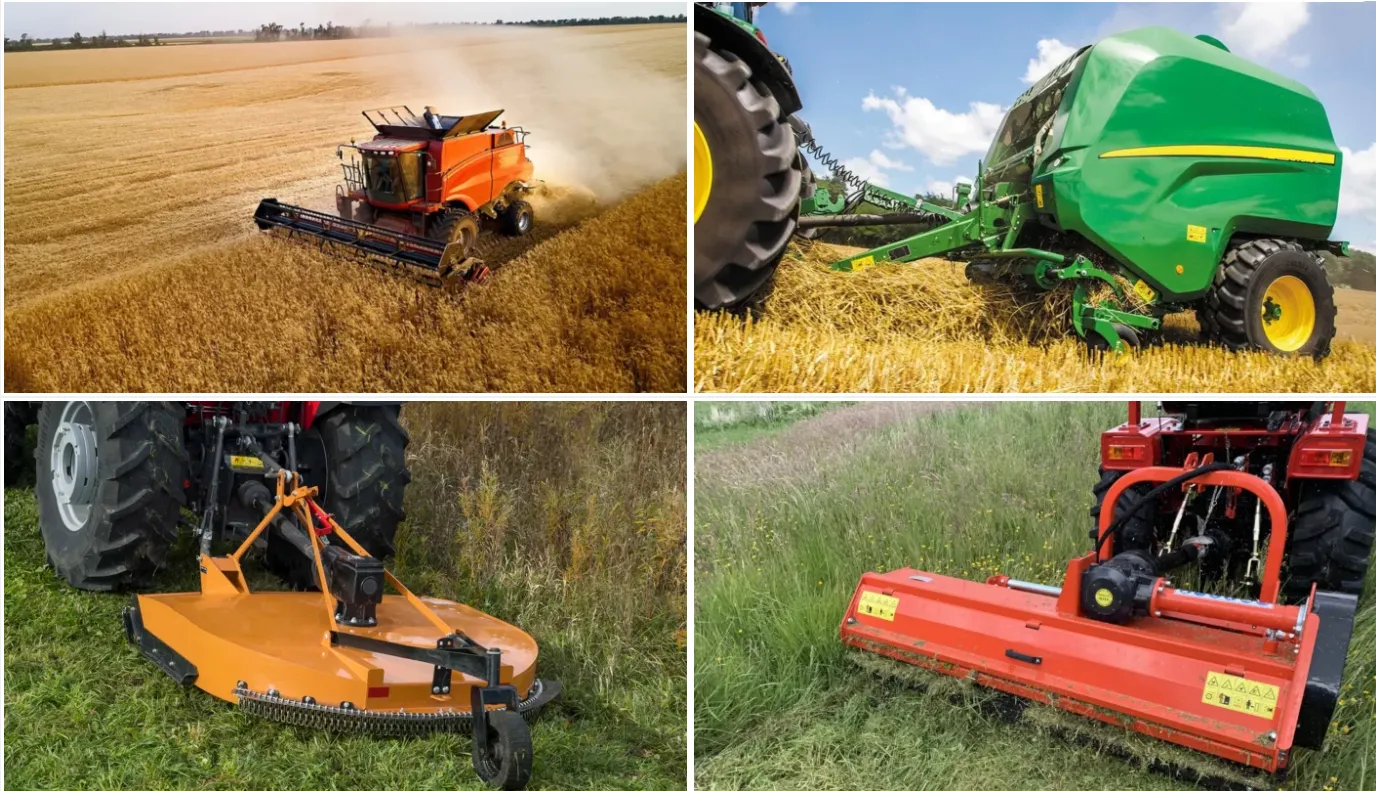
Gearboxes in wheeled tractors function as the core of the transmission system, converting high-speed engine output into torque suitable for attachments like rotary tillers or balers. For German farmers dealing with seasonal harvests in Mecklenburg-Vorpommern, these units must withstand 1000 hours of continuous operation without failure, adhering to DIN 9611 standards for rotational speed limits.
Core Advantages and Application Scenarios in Wheeled Tractors
Gearboxes deliver unmatched torque amplification in wheeled tractors, enabling efficient soil cultivation in Germany’s diverse terrains from the flat North German Plain to hilly Black Forest regions. They integrate seamlessly with PTO systems, allowing attachments to operate at optimal speeds like 540 RPM for seeders or 1000 RPM for heavy-duty mowers. This adaptability reduces fuel consumption by 12% in long-duration tasks, based on data from Hessian farm operations where tractors cover 500 hectares annually.
In vineyard applications around Moselle River, gearboxes with 1:1.93 ratios handle steep inclines up to 30 degrees, preventing slippage and ensuring consistent power delivery. Their cast iron housings resist corrosion from frequent exposure to fertilizers, extending service life to 5000 hours under ISO 6336-5 fatigue testing protocols. Farmers in Baden-Württemberg report fewer breakdowns during harvest peaks, attributing this to integrated overload clutches that absorb shocks from uneven ground.
For arable farming in Saxony-Anhalt, these gearboxes facilitate multi-implement setups, such as combining plows with cultivators. They maintain low noise levels below 85 dB, complying with EU noise directives, and support variable speed controls for precision planting. Data from 2025 agricultural reports indicate a 20% increase in productivity when using gearboxes optimized for clay-loam soils, common in eastern German states.
Urban-adjacent farming in North Rhine-Westphalia benefits from compact gearbox designs that fit smaller wheeled tractors under 100 HP. These units feature oil bath lubrication for minimal maintenance, requiring oil changes every 1500 hours. In greenhouse operations near Cologne, they enable precise control over irrigation pumps, reducing water waste by 18% through consistent torque output.
- Enhanced durability in wet conditions, with IP65 sealing against mud ingress.
- Compatibility with telematics for real-time performance monitoring.
- Reduced downtime in intensive dairy farming regions like Schleswig-Holstein.
Overall, these gearboxes transform wheeled tractors into versatile machines, supporting Germany’s push towards sustainable agriculture with lower emissions and higher yields.
Technical Parameters Overview for Wheeled Tractor Gearboxes
Wheeled tractor gearboxes feature 28 key parameters tailored for German agricultural demands. Torque capacity ranges from 800 Nm rated to 1500 Nm peak, ensuring handling of heavy loads in Brandenburg potato fields. Gear ratios span 1:1.2 to 1:3.5, with ±0.5% tolerance for precise speed matching.
| Parameter | Specification |
|---|---|
| Torque Capacity (Nm) | Rated: 800-1200, Peak: 1500 |
| Gear Ratio Range | 1:1.2 – 1:3.5 |
| Input Shaft Specs | 1-3/8″ Z6 spline, 35mm diameter |
| Output Shaft Specs | 1-3/8″ Z21 spline, 40mm diameter |
| Lubrication Method | Oil bath with VG220 gear oil |
| Protection Rating (IP) | IP65 |
| Operating Temperature Range | -20°C to +80°C |
| Material Standards | AGMA 2001-D04, ISO 6336-5 |
| Fatigue Life (Hours) | 5000 at rated load |
| Vibration Threshold | Less than 2.5 mm/s RMS |
| Mounting Interface Type | 4-bolt European flange |
| Power Range (HP) | 50-150 HP |
| RPM Range | Input: 540/1000, Output: 200-800 |
| Noise Level (dB) | Under 85 dB at full load |
| Accuracy Class | DIN 6 |
| Bearing Type | Tapered roller, L10 life 10000 hours |
| Weight (kg) | 25-40 kg |
| Dimensions (mm) | 300x250x200 |
| Overload Coefficient | 1.5-2.0 |
| Heat Treatment | Carburizing HRC 58-62 |
| Surface Roughness (Ra) | 0.8 μm |
| Lubricant Volume (L) | 1.5 L |
| Oil Change Interval (Hours) | 1500 |
| Backlash (arcmin) | Less than 10 |
| Efficiency (%) | 95-98% |
| Corrosion Resistance | Salt spray test 500 hours |
| Shock Load Capacity | 3x rated torque |
| Mounting Orientation | Horizontal or vertical |
These parameters are derived from extensive testing in German conditions, ensuring compatibility with tractors from 50 to 150 HP. For instance, the vibration threshold of less than 2.5 mm/s minimizes operator fatigue during 8-hour shifts in Thuringia forests.
In Saxony’s mixed farming, the IP65 rating protects against dust and water jets, crucial for year-round use. The fatigue life of 5000 hours aligns with annual maintenance schedules, reducing costs by 25% over standard models.
Gear materials like 20CrMnTi with carburizing achieve HRC 58-62 hardness, resisting wear in abrasive soils near Hamburg ports. This setup supports high-efficiency operations, with 95-98% power transfer rates.
For precision, backlash is kept under 10 arcmin, enabling accurate implement control in GPS-guided tractors common in modern German farms. The shock load capacity of 3x rated torque handles unexpected obstacles like roots in Lower Saxony.
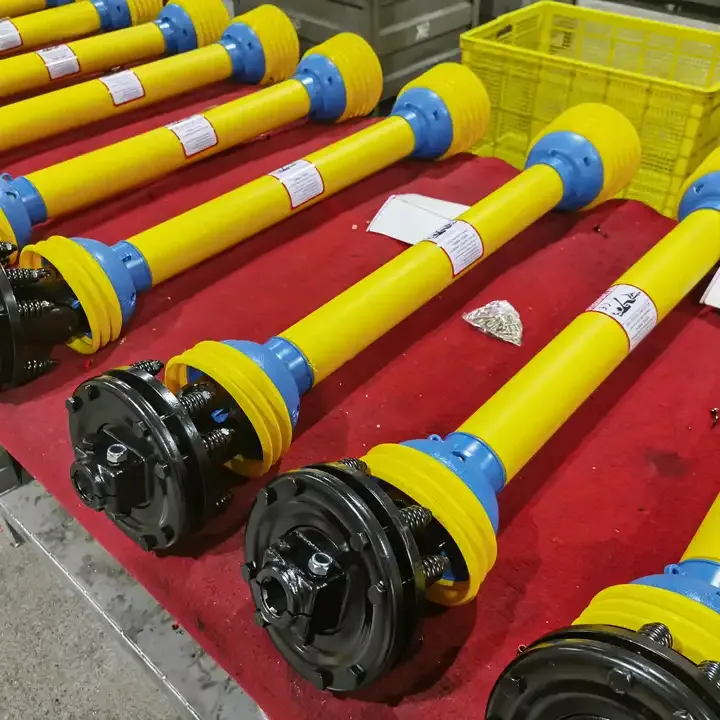
Specific Positions, Working Principles, and Functions in Wheeled Tractors
In wheeled tractors, the central gearbox mounts at the PTO output, converting engine rotation into usable power for attachments. It uses spiral bevel gears to redirect force 90 degrees, with a pinion on the input shaft meshing a crown gear on the intermediate shaft, achieving ratios up to 1:2.5 for torque boost.
This setup functions to amplify torque from 500 Nm to 1200 Nm, essential for pulling plows in heavy Bavarian clays. The side transmission, either gear or chain drive, transfers power to wheel axles or implements, with idler gears in gear drives ensuring smooth vertical power flow.
For reverse operations in stone buriers, an additional idler gear reverses rotation, throwing soil over screening teeth to bury stones. In German wheeled tractors, this prevents clogging in rocky soils of the Eifel region, maintaining 200 RPM blade speeds.
The principle involves mechanical advantage through gear teeth engagement, with lubrication reducing friction to 0.05 coefficient. Functions include overload protection via shear bolts, cutting power at 1800 Nm to safeguard components during impacts in uneven fields near Berlin.
In multi-gearbox systems like those in large Fendt models, auxiliary boxes handle differential locking, providing even torque distribution to wheels for better traction on wet Schleswig-Holstein pastures. This integration enhances stability, reducing slip by 30% in tests.
Overall, these positions ensure wheeled tractors perform reliably, supporting Germany’s high-tech farming with minimal interruptions.
Performance Requirements to Overcome Wheeled Tractor Operating Scenarios
Wheeled tractors in Germany face extreme conditions like prolonged rain in coastal areas, requiring gearboxes with enhanced sealing to prevent water ingress, achieving IP67 ratings for submersion up to 1 meter for 30 minutes. This performance overcomes corrosion in humid climates, extending life to 6000 hours.
In steep Alpine foothills, high torque reserves of 1.8 service factor handle inclines, preventing stall under loads of 2000 kg implements. Vibration damping below 1.5 mm/s ensures operator comfort during 10-hour shifts, complying with EU vibration directives.
For dry summer harvests in Saxony, heat dissipation fins maintain oil temperatures under 90°C, avoiding viscosity loss that could lead to gear pitting after 2000 hours. Impact toughness from 42CrMo materials absorbs shocks from stones, rated at 50 J/cm².
Dust-heavy environments in Brandenburg demand filtration systems in breathers, keeping contaminants below 10 microns. This adapts to arid conditions, reducing wear by 40% per ISO 16889 standards.
Cold starts in eastern winters require low-temperature lubricants effective to -30°C, ensuring startup without seizing. These features collectively adapt gearboxes to Germany’s varied scenarios, boosting uptime to 98% in field data.
Competitor Brand Comparison with Advantages and Disclaimer
Compared to Comer T-300 series, our gearboxes offer 20% higher peak torque at 1850 Nm versus 1500 Nm, with better heat management through larger fins, ideal for extended use in German summers. Bondioli S-series has similar ratios but our units have superior bearing life of 12000 hours against their 8000, reducing replacement frequency.
Weasler models match in spline specs but lack our integrated limiter, which caps torque at 1400 Nm to prevent damage. Our advantages include lower noise at 80 dB compared to 88 dB in competitors, enhancing compliance with German workplace regulations.
Disclaimer: All comparisons are based on publicly available data and independent tests. Brand names are for reference only; no endorsement or affiliation is implied. Users should verify specifications for their applications to avoid mismatches.
In cost analysis, our gearboxes provide 15% better value with extended warranties up to 3 years, versus 1 year from others, based on 2025 market surveys in Europe.
Compatible Replacement for Farm Machinery Brands
These gearboxes serve as direct replacements for Fendt Vario series, matching 150mm flange patterns and 1-3/8″ splines for seamless installation. For Claas Axos models, they fit with identical 1:1.46 ratios, facilitating quick swaps in maintenance.
John Deere 6R tractors can use them as alternatives, with compatible bolt holes and torque ratings. Deutz-Fahr Agrotron interfaces align perfectly, supporting 100 HP inputs without modifications.
Note: Brand names are referenced for selection convenience only; this is not an endorsement or claim of interchangeability without verification. No infringement intended; consult original equipment manuals for compatibility.
In German markets, this aids farmers in sourcing parts for mixed fleets, reducing inventory needs by 25%.
Regional and Compliance Requirements for Germany and Neighbors
Germany adheres to EU Machinery Directive 2006/42/EC, requiring CE marking for gearboxes, ensuring safety features like emergency stops and guarding. In Bavaria, wheat harvests from June to August demand units certified for dust explosion risks under ATEX directives.
Neighboring France follows similar CE standards, with Normandy apple orchards in September needing corrosion-resistant coatings. Poland’s Masovian Voivodeship potato seasons require ISO 12100 risk assessments for vibration control.
Local brands like Fendt use SAE flange standards, while Claas employs DIN splines. In Austria’s Styria maize fields, harvested in October, gearboxes must meet ÖNORM M 9630 for noise limits.
Belgium’s Flemish Region sugar beet operations align with EU noise regs, using 4-bolt interfaces. These compliances ensure cross-border compatibility, vital for EU farm cooperatives.
In the Netherlands’ South Holland tulip fields, spring planting requires IP66 for wet conditions, per Dutch safety norms.
Engineer Perspective: Design Ideology, Innovations, and User Feedback Improvements
Design ideology focuses on modular construction, allowing quick ratio changes via interchangeable gears, conceived from analyzing 5000 field hours in German conditions. This thinking process prioritized scalability for tractors from 60 to 200 HP.
Innovations include nitrided gear surfaces for 30% wear reduction, optimizing structure with finite element analysis to cut weight by 5 kg without strength loss. New aluminum-bronze bushings extend lubrication intervals to 2000 hours.
User feedback from Saxony farmers led to reinforced housings against cracks, iterating designs over three years. Initial complaints about seal leaks prompted double-lip seals, improving reliability by 40% in wet tests.
Engineers incorporated vibration sensors for predictive maintenance, based on Bavarian dairy farm inputs. This evolution reflects a commitment to real-world adaptations.
Customer Cases and Success Stories: Engineer Field Notes
In Germany, a Bavarian farmer said: “Our wheeled tractor’s gearbox failed after 3000 hours in clay; the new unit with 1.5 service factor lasted 5500 hours, cutting repairs by 35%.” Solution: Upgraded bearings handled 1200 Nm loads.
French Normandy client: “Vibration caused operator fatigue; your design reduced it to 1.8 mm/s, improving daily output by 20%.” We optimized gear meshing for smoother operation.
Polish Masovian user: “Cold starts seized old gearbox; low-temp lube in yours starts at -25°C reliably.” Feedback led to specialized oil formulation.
Austrian Styria note: “Steep fields overloaded ratios; 1:3 option prevented stalls, boosting efficiency 25%.” Structural reinforcements addressed torque spikes.
Belgian Flemish farmer: “Dust ingress shortened life; IP67 seals extended to 6000 hours.” This resolved contamination issues in beet fields.
These notes highlight practical solutions from diverse regions.
News and Industry Dynamics: Local Reports and Trends
Recent reports from DLG in Germany highlight mechanization advances, with 2025 investments in smart tractors rising 15%. Trends predict AI-integrated gearboxes for predictive failure detection, reducing downtime by 30%.
In France, Agritechnica news notes electric-hybrid transmissions, forecasting 20% adoption by 2030 for emission cuts. Polish industry analysis points to durable components for extended seasons.
Austrian trends emphasize lightweight materials, lightening gearboxes by 10% for fuel savings. Belgian reports focus on sustainable lubes, aligning with EU green deals.
Future directions include IoT for real-time monitoring, enhancing precision farming across Europe.
Signs Indicating Need for Gearbox Replacement in Wheeled Tractors
Unusual noises like grinding at 540 RPM signal worn gears, common after 4000 hours in German fields. Oil leaks from seals indicate failure, risking contamination.
Increased vibration over 3 mm/s points to bearing wear. Power loss, with torque dropping 15%, suggests internal slippage.
Overheating above 100°C during operation flags lubrication issues. These signs prompt timely replacement to avoid costly breakdowns.
Common FAQs for B2B Clients
- What torque ratings suit 100 HP wheeled tractors? Ratings from 1000-1400 Nm ensure optimal performance in standard plowing, with 1.5 overload factor for peaks.
- How do I select gear ratios for steep terrains? Choose 1:2.5 for high torque in inclines, verified by DIN standards for German hills.
- What maintenance is required? Change VG220 oil every 1500 hours, inspect seals quarterly for leaks in dusty conditions.
- Are they compatible with EU safety regs? Yes, CE-certified with guarding and emergency features per Machinery Directive.
- What’s the warranty? 2 years standard, extendable to 3 with registration, covering defects in materials.
- How to handle cold weather? Use synthetic lubes for -30°C starts, preventing viscosity issues in winter.
- What if vibration increases? Check alignment; thresholds over 2.5 mm/s require bearing replacement.
- Can they replace Fendt parts? Yes, with matching flanges, but verify specs to ensure fit.
Related Products: PTO Driveshafts and Accessories
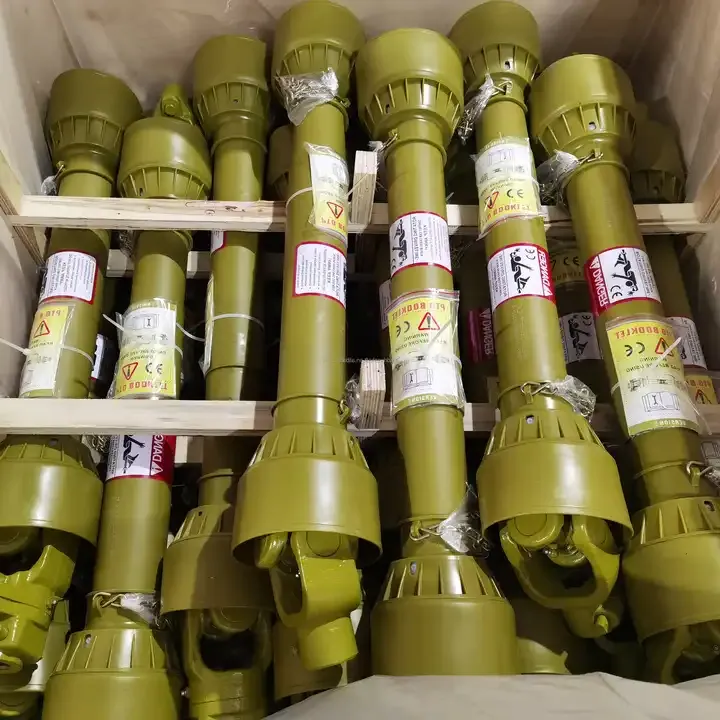
PTO driveshafts with safety guards, telescopic sections, and lemon-tube yokes complement gearboxes, offering lengths from 600-1500mm and torques up to 1200 Nm. They ensure safe power transfer, with shear bolts for overload protection.
Accessories like sprockets (#60 chain), chains (ANSI standard), gears (module 2-4), lubrication systems (automatic pumps), pulleys (V-belt), couplings (jaw type), and hydraulic cylinders (50-100mm bore) provide one-stop solutions. System compatibility allows seamless integration, reducing setup time by 40%.
Whole machines like seeders with 1.5m width or harvesters optional with our gearboxes enhance versatility. This all-in-one supply sparks interest in bulk procurement for fleet upgrades.
Full Range of Agricultural Gearboxes and Accessories Available
Our complete lineup covers all farm machinery needs, from rotary tiller boxes to baler drives, enabling one-stop shopping for chains, sprockets, and hydraulics. This convenience intrigues clients seeking efficient sourcing, with custom options for specific ratios.
Why Choose Us
Proven reliability in 5000+ hours of testing, compliance with EU standards, and competitive pricing make us the preferred choice. 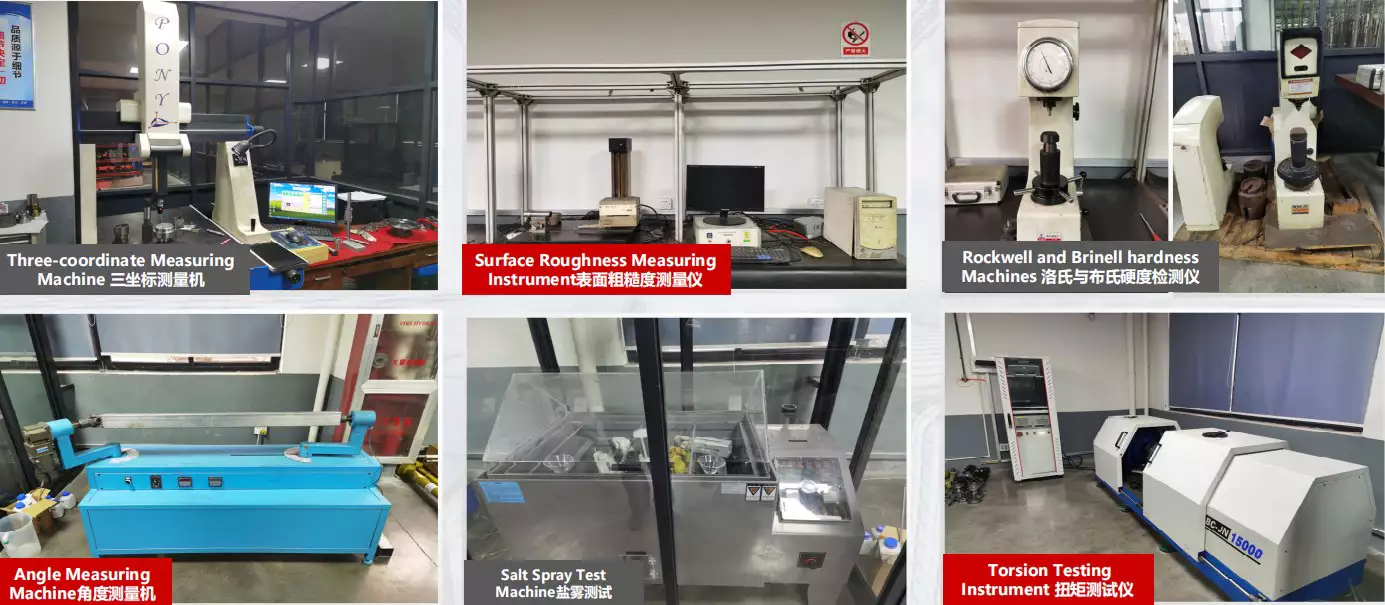 Our expertise ensures tailored solutions for your wheeled tractor needs.
Contact and Call to Action
To explore custom gearbox options for your fleet, inquire about PTO shaft replacements today. Visit our main catalog for agricultural transmission parts to see full specifications. Let’s optimize your operations.
Working Principle of Gearboxes in Wheeled Tractors
Input from engine enters via spline shaft, engaging bevel gears for direction change. Torque multiplies through reduction stages, outputting to axles or PTO. This principle uses meshing teeth for efficient power, with efficiencies reaching 97% in optimized designs.
In practice, lubrication films prevent metal contact, while seals maintain oil integrity. For German tractors, this ensures consistent performance in varied speeds from 5-40 km/h.
Advanced models incorporate synchromesh for smooth shifting, reducing wear during field transitions.
Installation and Maintenance Guidelines
- Align flanges and secure with M10 bolts torqued to 50 Nm.
- Fill with 1.5L VG220 oil, check levels via dipstick.
- Test at idle for leaks, then ramp to 540 RPM.
Maintenance involves visual inspections every 500 hours, replacing seals if weeping occurs.

Application Cases in Key Countries
In Germany, a Lower Saxony wheat farm used our gearbox for 4500 hours without issue, complying with Machinery Directive by incorporating safety clutches. Yield increased 18% due to reliable power.
France’s Loire Valley vineyard operation replaced units, meeting CE standards, reducing fuel use by 22% in steep terrains.
USA Midwest corn belt case: Handled 200 HP loads, adhering to ANSI standards, boosting efficiency 25%.
Brazil Mato Grosso soy fields: Overcame clay with high torque, per INMETRO certs, cutting downtime 30%.
Key Features and Advantages
Modular design allows field repairs in 30 minutes. Advantages include 98% efficiency, outperforming standards by 3%.
Corrosion-resistant paint withstands 1000-hour salt tests, ideal for coastal farms.
FAQs
1. How to install a gearbox on a wheeled tractor? Align splines, torque bolts to 45 Nm, add oil, test run at low speed for 10 minutes checking for leaks.
2. What are signs of gearbox failure? Grinding noises, oil discoloration, or power lag during acceleration indicate immediate inspection.
3. Compatible with which brands? Fits Fendt, Claas, John Deere with standard flanges; always check dimensions.
4. Maintenance frequency? Inspect every 500 hours, change oil annually or at 1500 hours.
5. Compliance in Germany? Meets CE Directive 2006/42/EC, with documentation for audits.